French Bulldog Harnesses: Fit and Walking Guide (2026)
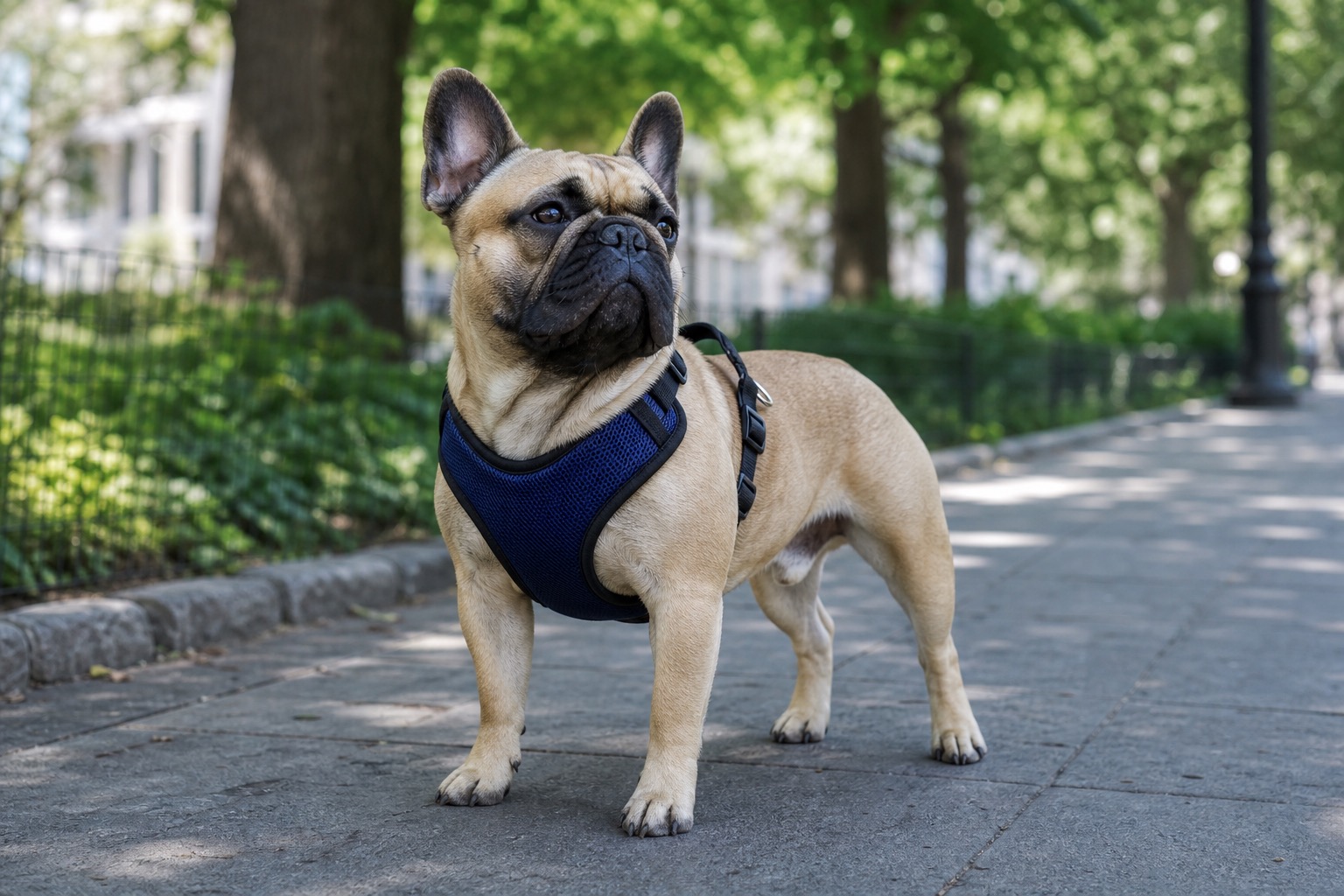
French Bulldogs vary widely in chest width, neck shape, fitness, and heat tolerance. A body harness can be a practical way to attach a leash without placing the connection at the neck, but it does not diagnose, treat, or prevent airway disease. Noisy breathing, distress, fainting, or reduced exercise tolerance warrants prompt veterinary advice, especially in warm conditions.
See also: Harness fit by body type · Pug hygiene & heat safety.
Harness measurement checklist
- Chest girth: widest point of the ribcage, typically a hand’s width behind the front legs. Record the number the size chart asks for.
- Lower neck / throat: only if the chart requires it; keep the tape snug but not compressing the airway.
- Body length / panel proportion: withers to base of tail (or brand’s stated points) so the back panel can centre without sliding onto the neck or hips.
- Indoor fit test: walk, turn, sit, and sniff. Reject any harness that folds, rides up the throat, or lets the dog reverse out.
Broad chests often need a wider size than weight charts suggest. Re-measure after body-condition changes.
Start with measured fit
Measure the widest chest, a hand’s width behind the front legs, and the lower-neck circumference required by the product chart. Do not buy from a generic “Frenchie” label. During an indoor fitting, centre the back panel on the spine and make sure the front component rests on the chest rather than high on the throat. The girth strap needs room behind the front legs, but not enough slack for a dog to reverse out.
Watch the harness during a walk, turn, sit, and head-down sniff. A harness that looks tidy in a standing photo can shift under leash tension. The right configuration stays centred, leaves a clear front-leg path, and does not create folded webbing or rubbing points.
| Walking context | Useful feature | Verify |
|---|---|---|
| Daily local walk | Adjustable back attachment | It remains centred at a normal pace |
| Training session | Clearly rated front and back points | A qualified trainer has checked the setup |
| Warm day | Low-bulk, easy-to-remove construction | It does not add unnecessary coverage or delay breaks |
| Escape concern | More than one body adjustment | Security without blocking shoulder movement |
Construction and use
Prioritize a shaped front, smooth edges, secure buckles, and adjusters that hold their setting. Heavy padding is not proof of good fit and can make it harder to see whether straps have moved. Clip a leash only to an attachment point identified by the maker; decorative rings and handles are not automatically load-bearing.
Plan warm-weather activity around conditions, not around a marketing claim about “breathability.” Use short routes, offer water and shade, and stop early if the dog appears uncomfortable. Remove the harness indoors and never leave it on an unattended dog where it could snag.
First-week protocol
Use calm, brief outings initially. Pause after several minutes to check alignment and, after removal, inspect the chest and behind the legs for rubbing. Persistent scratching, a changed gait, reluctance to put the harness on, or obvious distress mean stop and reassess. Wash grit from buckles, dry completely, and replace damaged webbing or cracked hardware.
Frenchie harness checklist
- Shop with chest and lower-neck measurements, not breed labels.
- Keep the front on the chest and the back connector centred.
- Confirm walking, turning, sitting, and sniffing movement.
- Use only rated leash attachments and remove the harness after walks.
- Treat breathing concerns as veterinary matters, not gear-selection problems.
FAQ
Is a harness better than a collar for French Bulldogs? Many owners prefer a body harness so leash force is not focused on the neck, but individual dogs differ. Airway disease still requires veterinary care regardless of leash attachment.
What about summer walks? Gear choice is secondary to temperature, humidity, route length, and the dog’s recovery. Stop early for noisy breathing, reluctance, or overheating signs.
This is deliberately a fit guide rather than a ranked product list. A specific product may change construction or sizing without notice; the measurements and movement checks remain useful.
About the Reviewer
Our editorial team researches breed-related needs, compares product specifications, and updates guides as information changes. Product gear does not replace veterinary advice. Read our editorial process.