Dog Harness Fit by Body Type
Updated
Reviewed by PetGearLabs Editorial Team
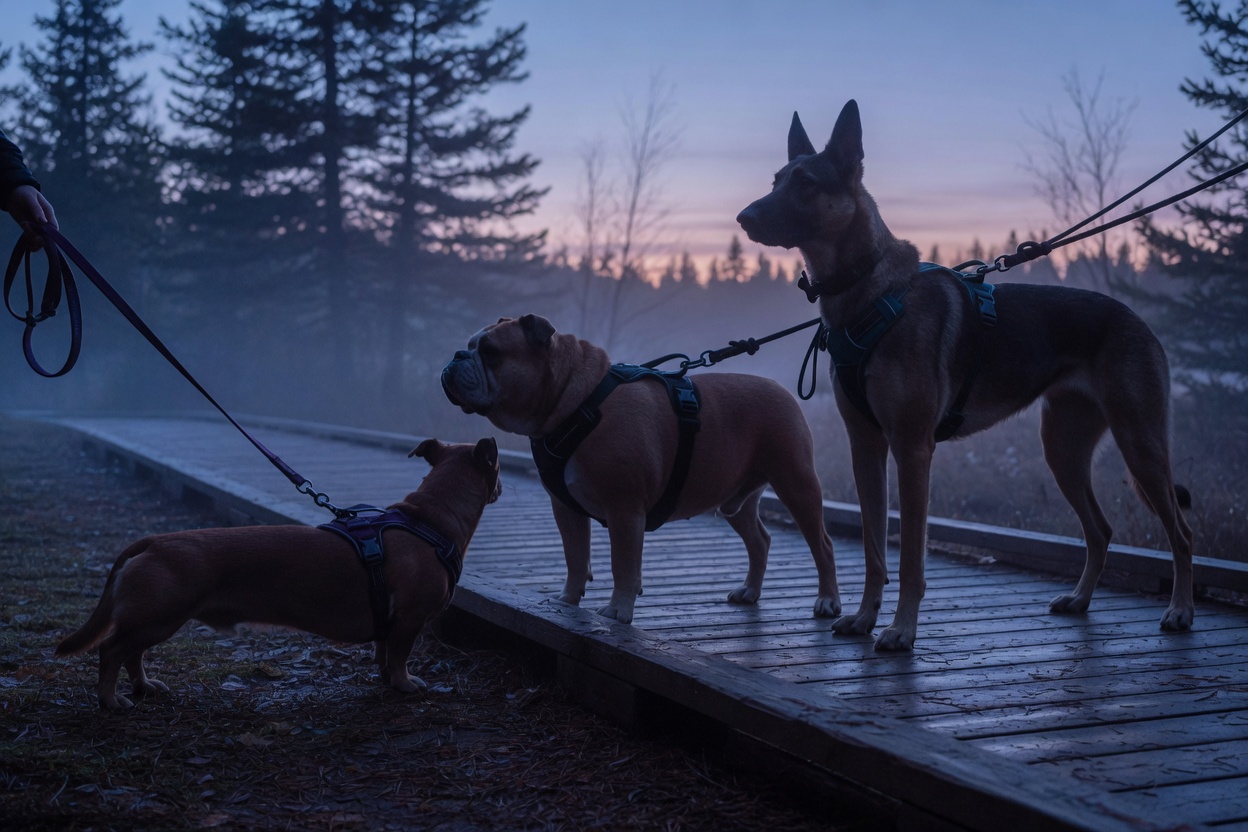
A dog harness should be chosen by body shape, measurements, and movement, not by a breed marketing label alone. This hub explains fit priorities for common body types and links to breed-specific guides. A harness is not medical treatment: new pain, neurologic signs, breathing distress, heat illness, or collapse need a veterinarian.
Harness measurement checklist
- Chest girth: widest point of the ribcage, typically a hand’s width behind the front legs. Record the number the size chart asks for.
- Lower neck / throat: only if the chart requires it; keep the tape snug but not compressing the airway.
- Body length / panel proportion: withers to base of tail (or brand’s stated points) so the back panel can centre without sliding onto the neck or hips.
- Indoor fit test: walk, turn, sit, and sniff. Reject any harness that folds, rides up the throat, or lets the dog reverse out.
Breed averages are starting points only. Two dogs of the same breed can need different sizes.
Body-type priorities
| Body type | Fit priority | Common failure | Start with |
|---|---|---|---|
| Long back, low chest (e.g. Dachshund, Corgi) | Short body panel proportion; girth clear of elbows; no “spine protection” claims | Panel too long; walking harness used as a lift | Dachshund harness guide, Corgi harnesses |
| Brachycephalic / broad chest (e.g. French Bulldog, Pug, Bulldog) | Chest width; throat clearance; easy on/off in heat | Strap high on neck; bulky coverage on warm days | French Bulldog harnesses, Bulldog harnesses, Pug hygiene & heat |
| Deep chest / athletic (e.g. Boxer, Dalmatian, German Shepherd) | Stable centreline under pull; shoulder freedom | Twisting back panel; elbow rub | Boxer harnesses, Dalmatian harnesses, GSD mobility gear |
| Giant / heavy (e.g. Great Dane) | Hardware rating, even load, handler control | Flimsy buckles; late size checks as puppies grow | Great Dane feeding / giant-breed context |
| Small / deep-chested toys (e.g. Pomeranian, Yorkshire Terrier) | Escape-resistant adjusters without choking; fine webbing edges | Reverse-out; neck pressure from poor Y-shape | Pomeranian harnesses, Yorkshire Terrier harnesses |
What “good fit” looks like
- Chest strap sits behind the front legs with room to move, not in the armpit crease and not sliding onto the abdomen.
- Front piece rests on the sternum/chest, not the soft throat.
- Back connector stays near the shoulders/withers centreline when the dog pulls lightly.
- Coat and skin show no red lines after a short indoor session.
- On/off is calm enough that you will actually remove the harness after walks.
Claims to reject
- “Prevents IVDD,” “protects the spine,” or “cures pulling” as medical guarantees.
- Size sold only as “for Frenchies” or “for Dachshunds” with no measurable chart.
- Handles marketed for lifting unless the manufacturer states lifting use and a vet has directed that handling method.
Core fit articles (Wave 2)
- How to measure a dog for a harness
- Front-clip vs back-clip
- Brachycephalic harness and heat-aware walking
- Giant-breed harness fit and handling
Next step
- Measure chest (and neck if required).
- Open the breed guide that matches your dog’s shape.
- Fit indoors before the first real walk.
- Pair gear with training and veterinary advice—not instead of them.
Browse all guides: All dog gear guides · By breed
About the Reviewer
Our editorial team researches breed-related needs, compares product specifications, and updates guides as information changes. Product gear does not replace veterinary advice. Read our editorial process.