Corgi Harnesses: Fit, Balance, and Daily Use (2026)
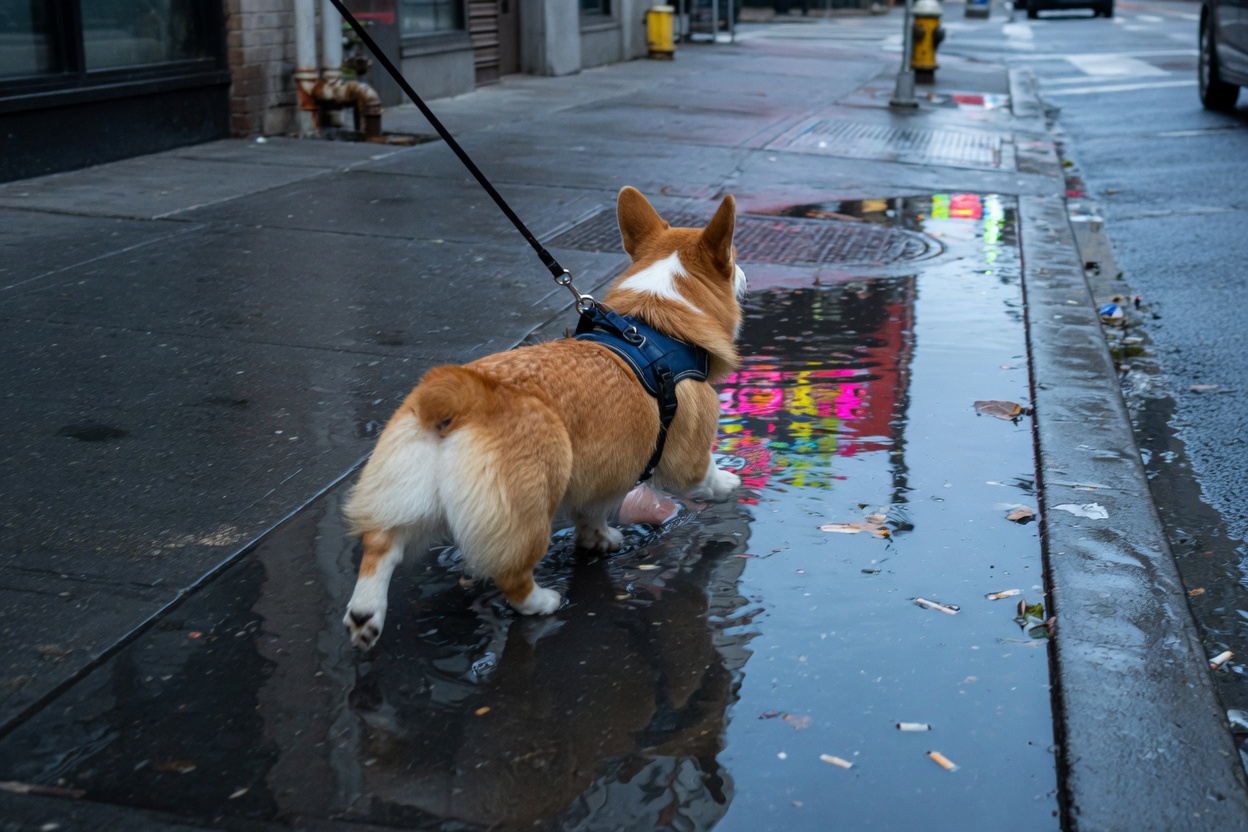
The right Corgi harness stays balanced through the dog’s low, quick stride. The wrong one twists around the ribcage, puts a strap into the front-leg area, or leaves enough space for a backwards escape. Marketing terms such as “no pull” do not guarantee fit or training results. Select a harness for walking control and comfort, then test it on the actual dog before treating it as everyday gear.
Long-back context: Harness fit by body type · How to measure · Dachshund harness guide.
Harness measurement checklist
- Chest girth: widest point of the ribcage, typically a hand’s width behind the front legs. Record the number the size chart asks for.
- Lower neck / throat: only if the chart requires it; keep the tape snug but not compressing the airway.
- Body length / panel proportion: withers to base of tail (or brand’s stated points) so the back panel can centre without sliding onto the neck or hips.
- Indoor fit test: walk, turn, sit, and sniff. Reject any harness that folds, rides up the throat, or lets the dog reverse out.
Corgis combine a deep chest with a long body—panel length and girth both matter.
Map the dog before shopping
Measure around the widest chest behind the front legs and, if requested, around the lower neck. Keep a note of back length too: it helps you recognize harnesses with an unusually long or short body panel. Use a flexible tape and the manufacturer’s sizing table. If the chest measurement lands at the end of a range, choose a model with meaningful room to adjust rather than forcing a borderline size.
During an indoor fitting, align the back connector with the centre of the spine. The front section should rest on the breastbone area, not climb onto the neck. Check how far the girth strap sits behind the front legs; it needs clearance through a full step. Have the dog walk in a straight line, turn each way, sit, and sniff. A harness that only appears correct while the dog is still has not passed the test.
| Typical use | Configuration to consider | Useful check |
|---|---|---|
| Everyday walk | Adjustable back-clip harness | It does not rotate when leash tension changes |
| Skills training | Front plus back attachment | It fits safely before training begins |
| Dog that backs out | Extra adjustment point | Secure without a restrictive chest panel |
| Long-line outing | Sturdy back clip | Hardware and stitching are rated for the intended lead |
Clip choice background: Front-clip vs back-clip.
Keep the front end clear
Look for a pattern that leaves room for forward reach instead of creating a rigid band across the shoulder area. That does not require maximal padding. Smooth webbing edges, a stable chest panel, and adjustment points that stay put are better evidence of usable construction. A very wide panel can make it harder to see whether the harness is sliding; inspect alignment often.
The leash ring must be a rated attachment point. Avoid clipping to decorative rings, labels, or handles. If you are working on pulling, use the configuration recommended by a qualified trainer and do not expect a product alone to change behaviour. A well-fitted harness helps you handle the dog; it does not train the dog by itself.
Set a recheck routine
On the first few walks, pause after five to ten minutes. The harness should remain centred, no strap should be folded, and the dog should keep their usual gait. After removal, inspect the areas behind the legs and around the chest. Persistent rubbing, avoidance, or a changed stride are reasons to stop using it and seek fit advice.
Keep buckles free of sand and mud. Wash according to the label, air dry fully, and inspect the webbing and bar tacks. Retire the harness if a buckle cracks, an adjuster loosens under normal tension, or a load-bearing seam frays. Do not leave it on at home or in a crate.
Corgi harness checklist
- Shop by chest and lower-neck measurement, not weight or breed name.
- Confirm a centred back panel and clear front-leg movement.
- Use only manufacturer-designated leash attachments.
- Recheck fit during early walks and after laundering.
- Replace compromised webbing, hardware, or seams.
- Never treat a walking harness as a spine-protection medical device.
Practice an uneventful fit check
Put the harness on when there is no immediate rush to get outside. Buckle it, check each adjustment, and ask the dog for a few calm steps before clipping the lead. This separates the fit routine from excitement at the door and makes it easier to spot a strap that has twisted. If more than one person walks the dog, agree on the same attachment point and adjustment reference. Consistency reduces accidental over-tightening and makes a new rub point easier to trace.
Avoid adding a jacket underneath until the bare-harness fit is established. If weather clothing is needed, repeat the walking check with both pieces on; extra fabric can change how every strap lies.
When selecting colour, favour one that lets you see the webbing, clips, and twist points in normal daylight. Being able to inspect the fit quickly is more useful than a pattern that hides every strap.
A Corgi harness is working when it is boring: centred, secure, and unnoticed by the dog during a normal walk.
About the Reviewer
Our editorial team researches breed-related needs, compares product specifications, and updates guides as information changes. Product gear does not replace veterinary advice. Read our editorial process.