How to Measure a Dog for a Harness (2026)
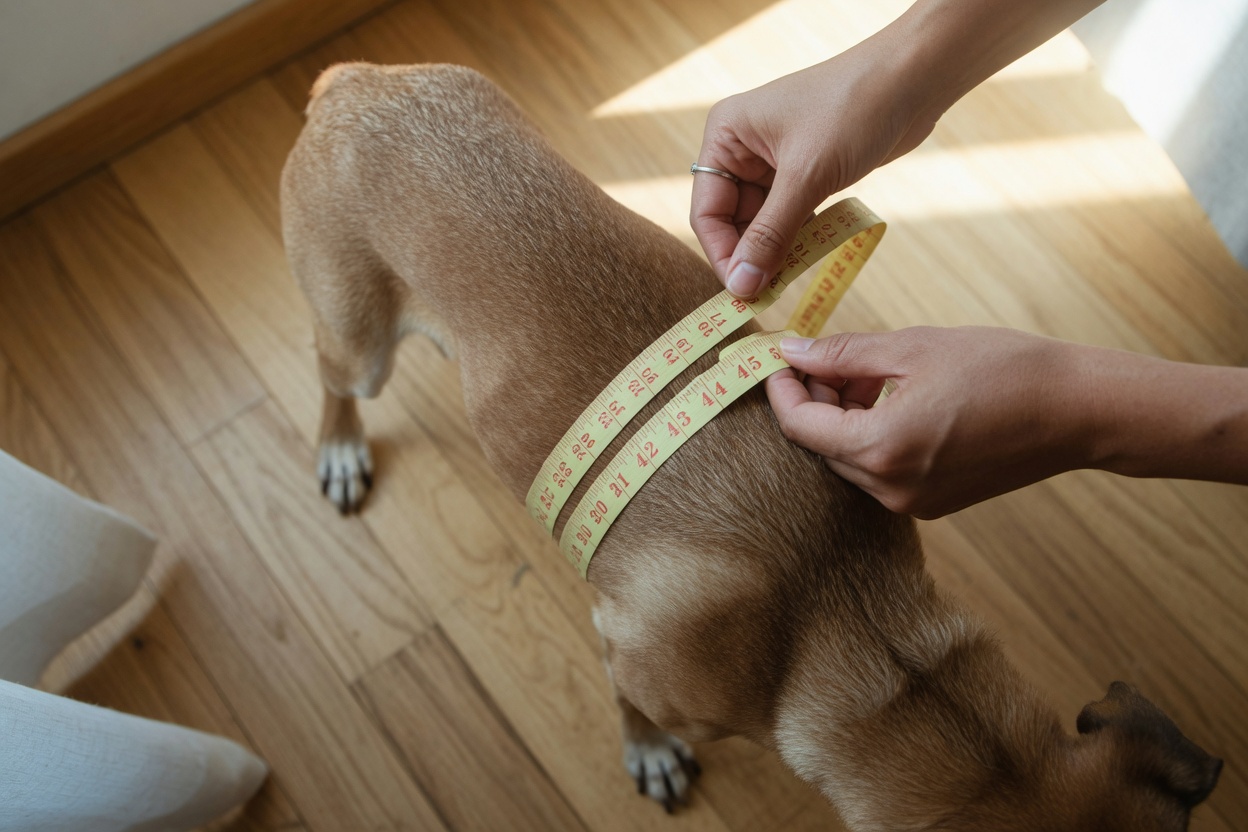
Sizing a harness by “medium,” weight, or breed name is how most fit problems start. Charts that matter use body measurements. This guide is the shared protocol behind our harness fit by body type hub and the breed-specific walking guides.

Harness measurement checklist
- Chest girth: widest point of the ribcage, typically a hand’s width behind the front legs. Record the number the size chart asks for.
- Lower neck / throat: only if the chart requires it; keep the tape snug but not compressing the airway.
- Body length / panel proportion: withers to base of tail (or brand’s stated points) so the back panel can centre without sliding onto the neck or hips.
- Indoor fit test: walk, turn, sit, and sniff. Reject any harness that folds, rides up the throat, or lets the dog reverse out.
Write the numbers down before you open a shopping tab. Guessing from memory is how between-size mistakes happen.
Tools that work
- Soft fabric or plastic measuring tape (not a stiff metal workshop tape)
- Treats or a second person for restless dogs
- The specific brand size chart you plan to buy—not a generic internet table
- Phone notes or a small notebook
If the dog is fluffy, press the tape through the coat to the body the way the maker’s diagram implies. Outer “fluff girth” oversizes many coats.
Chest girth (the primary number)
- Stand the dog square on a non-slip floor.
- Find the widest part of the ribcage—often about a hand’s width behind the front legs.
- Pass the tape under the chest and up both sides so it is level, not diagonal.
- Snug until the tape contacts the body; you should still slip a finger under it without a large gap.
- Read the measurement at the end of an exhale if the dog is panting hard; recheck once.
That number is what most harness charts call chest or girth. If your dog is at the top of a size band, prioritise models with long adjustment ranges over forcing the smaller shell.
Lower neck (only when the chart asks)
Some brands want a lower-neck or “throat” circumference for the front opening. Measure where their diagram shows—usually lower than a collar sits, still clear of the softest airway tissue. Do not substitute collar size from a different product.
Body length and panel proportion
Long-backed and short-backed dogs fail different panels. A rough withers-to-tail-base length helps you reject a harness whose back section will sit on the neck or slide onto the hips before you buy. It is a proportion check, not a medical assessment. For long-back specifics, see the Dachshund harness guide and Corgi harnesses.
From numbers to a size, then a real fit test
| Step | Pass | Fail |
|---|---|---|
| Chart match | Girth (and neck if required) sit mid-range with adjustment left | Girth only fits by stretching the last hole |
| Static on | Back centred; front on chest; girth clear of elbows | Throat ride-up; twisted webbing; open reverse path |
| Movement | Walk, turn, sit, sniff stay centred | Rotates, folds, rubs, or blocks shoulders |
| After 5–10 minutes | Same alignment; skin calm after removal | Hot spots, scratch focus, gait change |
Indoor testing is not optional. A harness that “looks fine” in a standing photo often fails the first sniff-and-turn.
Common measurement mistakes
- Using weight alone or Amazon “frequently bought” sizes
- Measuring over a thick coat or winter jacket
- Measuring while the dog sits or twists
- Mixing centimetres and inches on the chart
- Skipping re-measure after large weight or coat-season changes
- Assuming a “Frenchie harness” or “Dachshund harness” label replaces girth
After you buy
Recheck girth when the dog’s body condition changes, after surgery recovery weight shifts, or when you add seasonal clothing under the harness. Inspect webbing and buckles on a schedule; a perfect measurement does not save cracked hardware.
Related guides
- Harness fit by body type
- Front-clip vs back-clip
- French Bulldog harnesses
- Boxer harnesses
- All guides
Bottom line: record chest girth the way the chart defines it, size from those numbers, and only trust a harness that stays centred through walk, turn, sit, and sniff.
About the Reviewer
Our editorial team researches breed-related needs, compares product specifications, and updates guides as information changes. Product gear does not replace veterinary advice. Read our editorial process.