Brachycephalic Dogs: Harness Fit and Heat-Aware Walking (2026)
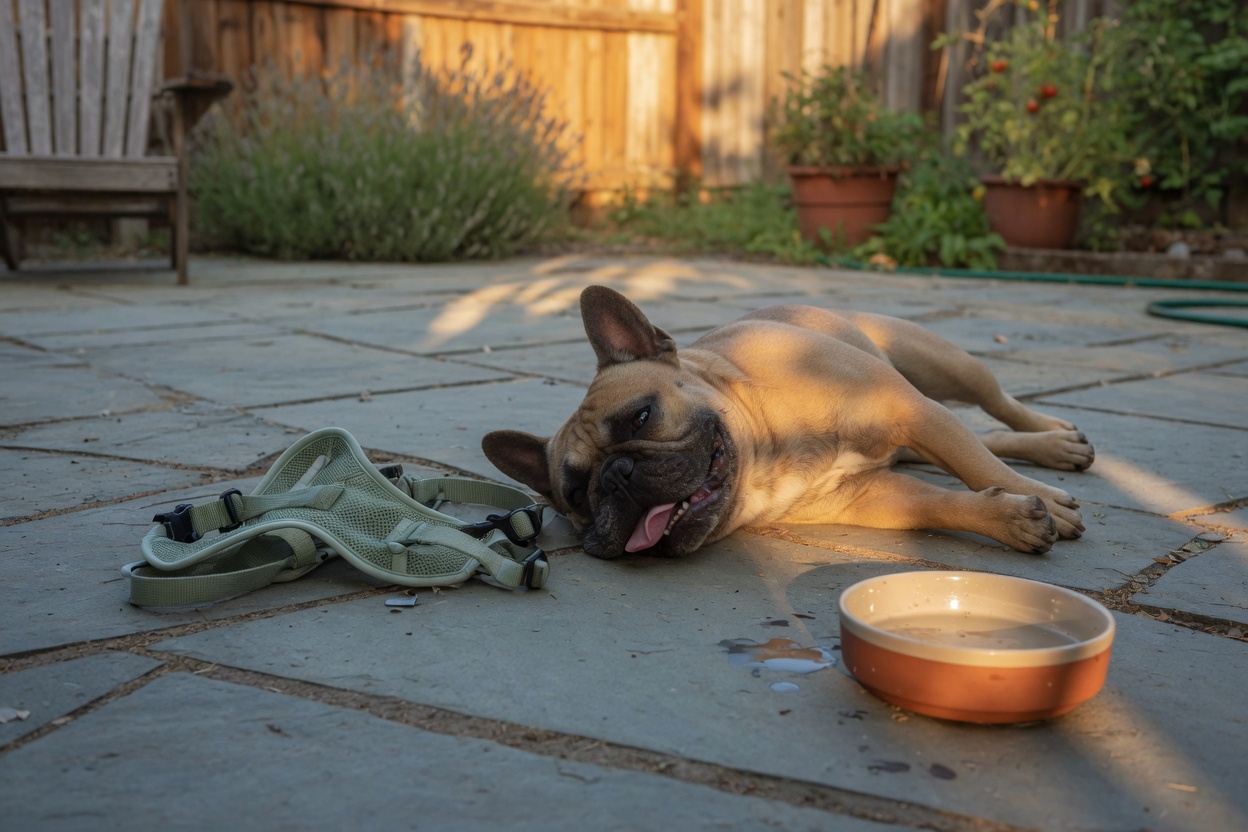
French Bulldogs, Pugs, Bulldogs, and other short-muzzled dogs vary widely in chest width and heat tolerance. A harness can be a practical leash connection away from the neck, but it is not airway treatment and it does not make hot weather safe.
See also: Harness fit by body type · French Bulldog harnesses · Pug hygiene and heat · Bulldog harnesses.
Harness measurement checklist
- Chest girth: widest point of the ribcage, typically a hand’s width behind the front legs. Record the number the size chart asks for.
- Lower neck / throat: only if the chart requires it; keep the tape snug but not compressing the airway.
- Body length / panel proportion: withers to base of tail (or brand’s stated points) so the back panel can centre without sliding onto the neck or hips.
- Indoor fit test: walk, turn, sit, and sniff. Reject any harness that folds, rides up the throat, or lets the dog reverse out.
Broad chests often need a larger shell than weight charts suggest. Between sizes, prioritise adjustment range.
Fit priorities for brachy body shapes
- Chest girth first — widest ribcage, not a “Frenchie size” nickname.
- Front on the sternum — not high on the soft throat.
- Shoulder clearance — girth behind the legs with a full stride.
- Fast on/off — you will remove this gear more often in heat.
- Rated leash ring only — see front-clip vs back-clip.
| Warm-weather need | Prefer | Avoid |
|---|---|---|
| Short toilet loop | Low-bulk back-clip, easy buckles | Multi-layer “adventure” padding you cannot remove fast |
| Training session | Rated configuration your trainer approves | Unrated front rings and marathon reps in sun |
| Escape concern | Extra adjusters that still clear shoulders | Choking the throat to “secure” the dog |
| Rest stops | Harness off in shade with water | Leaving a hot harness on while the dog pant-recovers |
Heat is a plan, not a fabric claim
Marketing words like “breathable” do not override:
- Air temperature and humidity
- Pavement heat
- Dog fitness and known airway status
- Walk length and recovery signs
Stop early for noisy breathing that worsens, reluctance, blue-tinged gums, collapse risk signs, or inability to settle. Those are veterinary concerns, not reasons to buy a different strap colour.
First-week protocol
Use calm, brief outings. Pause to check alignment. After removal, inspect chest and armpit skin. Persistent rubbing or avoidance means stop and re-fit. Wash grit from buckles; cracked hardware is retirement, not a patch job.
Checklist
- Measure chest (and chart neck if required); ignore breed-only labels.
- Keep the front on the chest; confirm walk/turn/sit/sniff.
- Choose low bulk and quick removal for warm months.
- Plan shade, water, and short routes before gear aesthetics.
- Seek veterinary care for airway or heat distress—gear is secondary.
Bottom line: fit the wide chest, keep pressure off the throat, and treat heat as a management problem. A harness is walking equipment, not a cooling system or a BOAS solution.
About the Reviewer
Our editorial team researches breed-related needs, compares product specifications, and updates guides as information changes. Product gear does not replace veterinary advice. Read our editorial process.