Giant-Breed Harness Fit and Handling (2026)
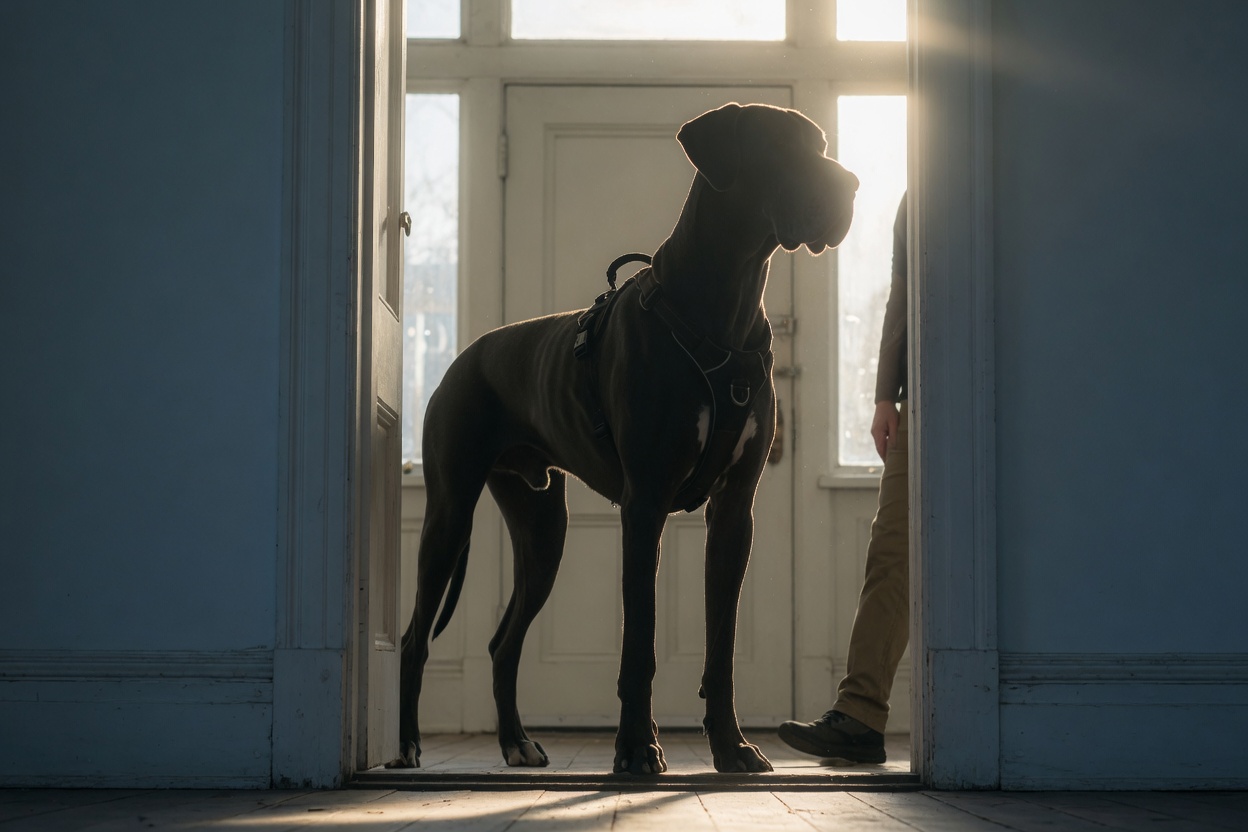
Giant and large deep-chested dogs turn small hardware mistakes into big problems. A harness should give a predictable connection for walking and training—not a promise of control theatre or medical support.
Related: How to measure · Harness fit by body type · Great Dane feeding context · German Shepherd mobility gear.
Harness measurement checklist
- Chest girth: widest point of the ribcage, typically a hand’s width behind the front legs. Record the number the size chart asks for.
- Lower neck / throat: only if the chart requires it; keep the tape snug but not compressing the airway.
- Body length / panel proportion: withers to base of tail (or brand’s stated points) so the back panel can centre without sliding onto the neck or hips.
- Indoor fit test: walk, turn, sit, and sniff. Reject any harness that folds, rides up the throat, or lets the dog reverse out.
Deep chests and long legs change how panels sit. Always recheck after growth spurts.
Fit priorities at scale
- Chest girth accuracy — tape level, dog standing square.
- Hardware class — buckles and stitches that look “fine” on a spaniel may not belong on a Dane.
- Panel balance — back clip near the withers centreline under light tension.
- Handler reality — you must be able to put it on without a wrestling match.
- Honest use — walking and training configurations only, unless a product is explicitly rated for more.
| Situation | Prefer | Do not assume |
|---|---|---|
| Daily walk | Rated back-clip, wide adjustment | That “XL” fits every giant |
| Adolescent growth | Frequent re-measure | Last season’s holes still centre |
| Training | Configuration a trainer specifies | Unrated front rings |
| Assist / lift needs | Vet-directed product and method | Walking handle = lift rating |
| Vehicle travel | System designed for vehicles | Walking harness as car restraint by default |
Growth and condition changes
Giants spend a long time “between” sizes. Build a habit: measure before reordering, photograph the adjustment positions that worked, and retire stretched webbing. A harness that was perfect at 18 months can rotate at 24 months without any drama—until the first lunge.
Handling boundaries
- Clip only to manufacturer-rated rings (clip comparison).
- Do not treat a walking harness as a hoist.
- Pair gear with management: space, training, and realistic handler strength.
- Pain, collapse, or sudden mobility change → veterinary path first.
Checklist
- Girth (and chart neck if required) recorded in writing.
- Size mid-range with adjustment left.
- Indoor movement test under realistic tension.
- Hardware and stitching inspected on a schedule.
- Lift/assist uses only when explicitly rated and professionally advised.
Bottom line: measure the real dog, buy hardware that matches the mass, and keep walking harnesses in the walking lane.
About the Reviewer
Our editorial team researches breed-related needs, compares product specifications, and updates guides as information changes. Product gear does not replace veterinary advice. Read our editorial process.