Front-Clip vs Back-Clip Dog Harness: How to Choose (2026)
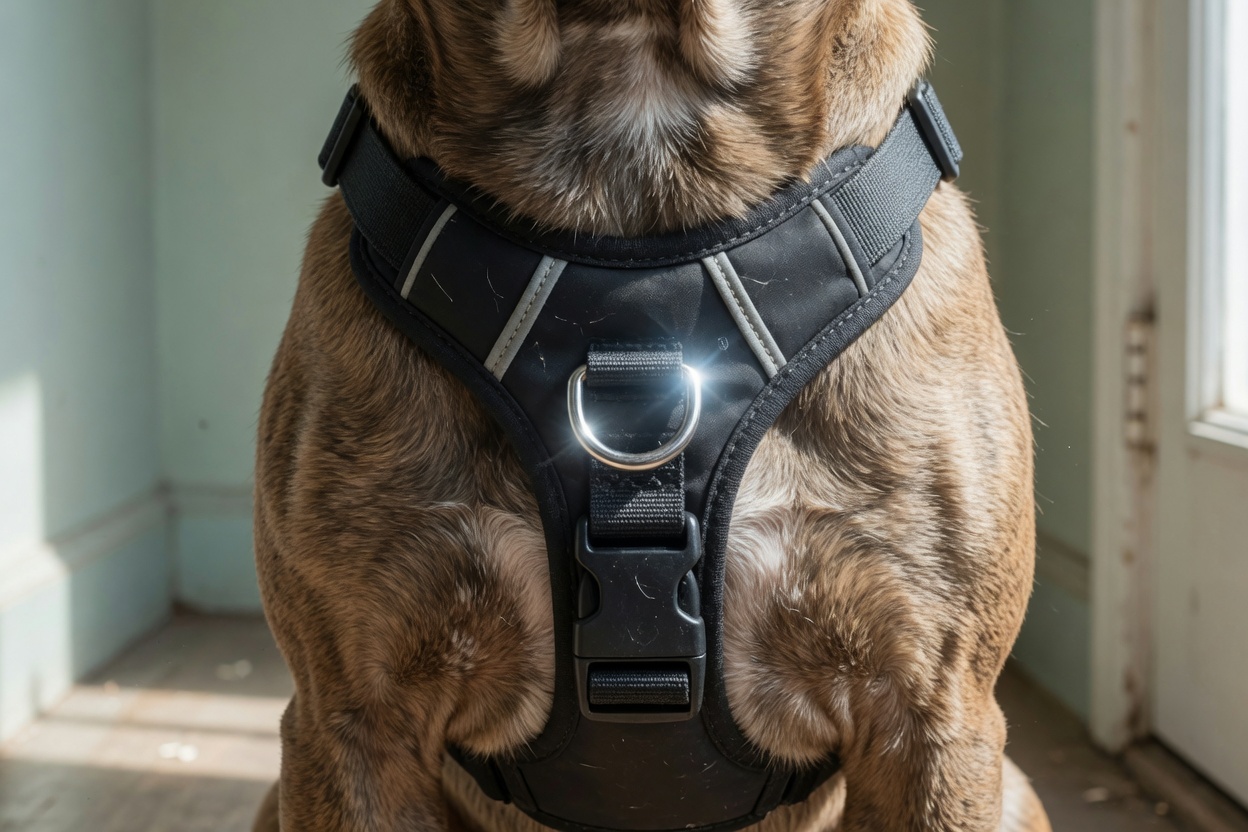
“Front-clip” and “back-clip” describe where the leash attaches, not whether the harness fits. Buy the shell for the dog’s body first (how to measure), then pick an attachment that matches the job.
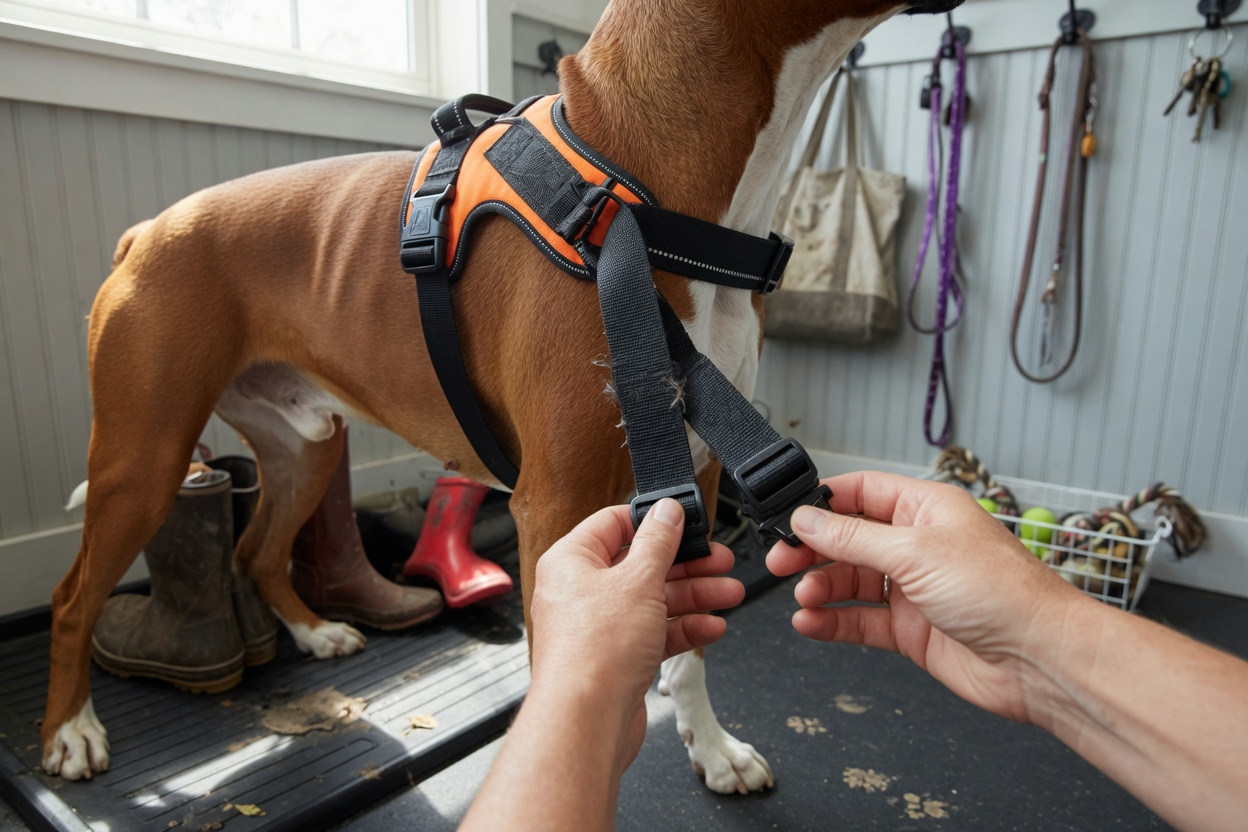
Harness measurement checklist
- Chest girth: widest point of the ribcage, typically a hand’s width behind the front legs. Record the number the size chart asks for.
- Lower neck / throat: only if the chart requires it; keep the tape snug but not compressing the airway.
- Body length / panel proportion: withers to base of tail (or brand’s stated points) so the back panel can centre without sliding onto the neck or hips.
- Indoor fit test: walk, turn, sit, and sniff. Reject any harness that folds, rides up the throat, or lets the dog reverse out.
A dual-clip harness that does not fit is still a dual-clip problem. Size first.
Quick comparison
| Back-clip | Front-clip | Dual-clip (rated) | |
|---|---|---|---|
| Typical job | Everyday walks, calm connection | Training plans that use chest leverage | Flexibility when both points are rated |
| Handler feel | Familiar; force along spine line | Can turn dog toward handler when used as designed | Depends which ring you use |
| Fit risks | Rotation if panel is loose | Throat ride-up if front sits high | Same shell risks as either mode |
| Not a substitute for | Training, recall, management | Training, management, vet care | Either of the above |
Back-clip: default for many walks
A back attachment between the shoulders is the everyday default for many pet dogs when:
- Walks are primarily exercise and toileting, not structured pull-work
- The harness stays centred under normal leash tension
- The ring is manufacturer-rated for leash use
Watch for a clip that sits so far aft that the harness becomes a “drag sled” rotating around the chest. Centring and girth security matter more than ring chrome.
Front-clip: tool, not magic
A front attachment on the chest can help some handlers implement a training plan by changing leverage when the dog surges. It is not:
- A guarantee the dog will stop pulling
- A treatment for anxiety, reactivity, or airway disease
- Permission to use unrated hardware or decorative loops
If a trainer recommends front-clip work, use the configuration they specify, keep sessions short enough to watch gait and skin, and stop if the front rides into the throat or the dog shows distress.
Dual-clip harnesses
Dual-clip models are useful when both rings are rated and you have a clear rule for which to use when (for example, back-clip for neighbourhood loops, front-clip only in coached sessions). If only one ring is rated, treat the other as decoration.
Decision path
- Measure and pass an indoor movement test.
- If the primary need is ordinary walking → start with a well-fitted back-clip.
- If a qualified trainer has prescribed chest-leverage work → consider a rated front or dual system and follow their plan.
- If the dog has pain, neurologic signs, or breathing distress → veterinary care first, gear second.
- Re-read body-type fit priorities for long-back, brachy, deep-chest, giant, and small dogs.
Related guides
- How to measure a dog for a harness
- Harness fit by body type
- French Bulldog harnesses
- Boxer harnesses
- Bulldog harnesses
Bottom line: choose the clip for the job after the harness fits. Rated hardware and movement tests beat marketing diagrams every time.
About the Reviewer
Our editorial team researches breed-related needs, compares product specifications, and updates guides as information changes. Product gear does not replace veterinary advice. Read our editorial process.