Senior Dog Bed Entry Height: The Pass/Fail Test (2026)
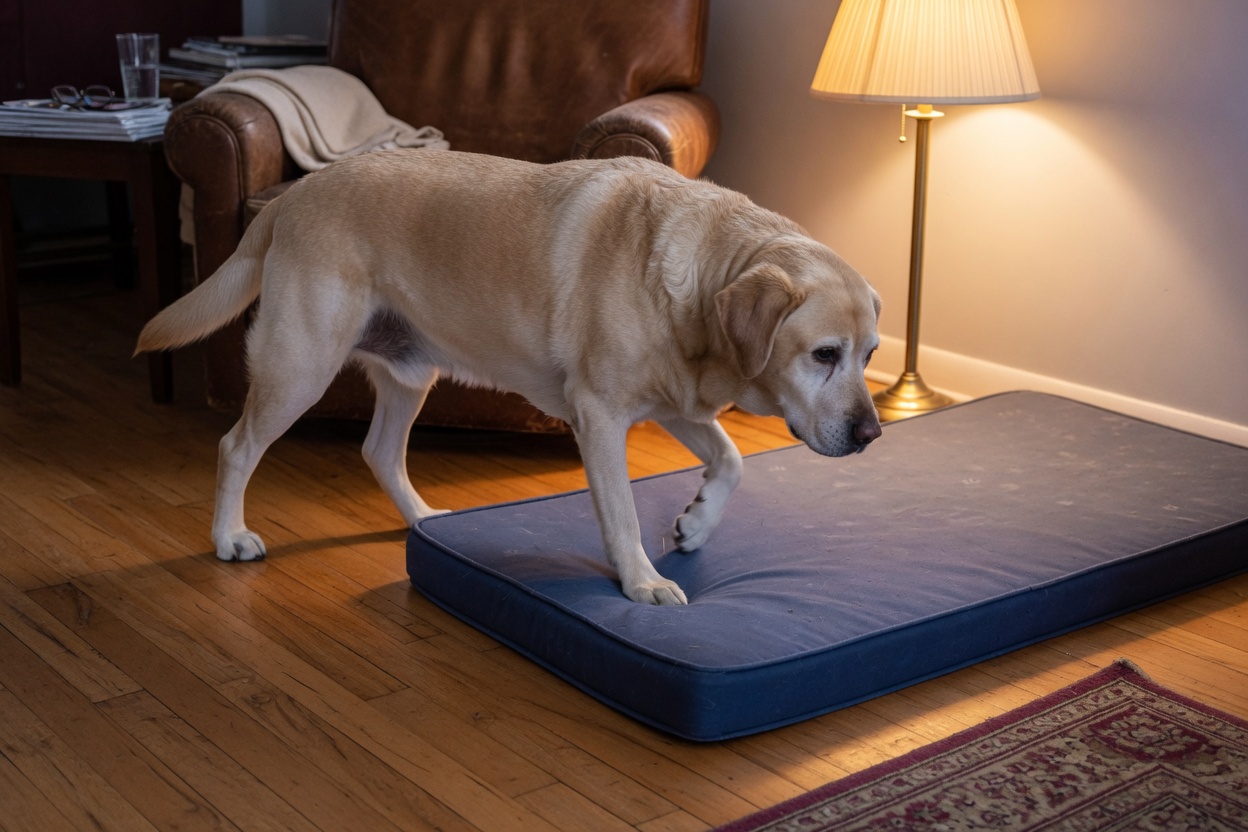
For many seniors, entry height fails before cushion firmness. A bed that is “supportive” on paper but hard to climb onto becomes an expensive floor ornament. This page is the entry-focused companion to the senior dog beds hub and the senior Labrador bed guide.
Bed measurement checklist
- Sleep stretch: measure nose-to-rump in the dog’s longest relaxed stretch on the floor; add margin at both ends.
- Interior surface: use the flat sleeping area, not the outer box size. Bolsters can remove a large share of usable space.
- Entry height: choose a low, stable approach the dog will use without jumping or twisting awkwardly.
- Placement test: level floor, non-slip base, quiet route—watch voluntary use for several days before adding accessories.
If the dog cannot enter, interior foam debates do not matter yet.
What “entry height” actually means
Entry height is the effort required to go from floor to usable sleep surface:
- Height of any front bolster or wall
- Softness of the rim (collapsing rims can still block stiff hips)
- Slip of the base when the dog shifts weight
- Angle of approach in your real room
A flat mattress on a non-slip pad often wins for sprawling large dogs. A low open-front bolster can work if the interior floor stays large.
Pass/fail test (one week)
| Result | What you see | Next action |
|---|---|---|
| Pass | Voluntary entry, full-body rest on the surface, easy exit | Keep; maintain wash routine |
| Soft fail | Enters only with heavy coaxing; rests half off | Lower rim, larger flat area, better placement |
| Hard fail | Avoids bed, cries, scrambles, or bed skates away | Return/replace; do not “add stairs” as first fix without checking height |
Place the bed where the dog already rests. Do not isolate a stiff dog in a cold corner and call it a product failure.
Thickness marketing vs usable design
| Claim | Ask instead |
|---|---|
| “Orthopedic 7-inch” | What is the step-on height of the front edge? |
| “Bolster lounge” | How wide is the flat interior after bolsters? |
| “For large breeds” | What are the interior length/width numbers? |
| “Therapeutic” | Will my dog choose it within a week? |
Pain, sudden stiffness, or refusal to rise is a veterinary issue. Beds do not diagnose or treat joint disease.
Recheck after the room or dog changes
Repeat the test after moving the bed to a different floor, washing the cover, or noticing a change in body condition. A base that was stable on carpet can slide on wood, and a bulky throw can raise the effective entry edge. Check the same ordinary approach, settle, turn, and exit sequence rather than relying on a single first impression.
Related guides
Bottom line: if the dog cannot step on calmly, the bed has failed—regardless of foam vocabulary. Fix entry and stability first.
About the Reviewer
Our editorial team researches breed-related needs, compares product specifications, and updates guides as information changes. Product gear does not replace veterinary advice. Read our editorial process.