Beagle GPS Trackers: Coverage and Backup Plan Guide (2026)
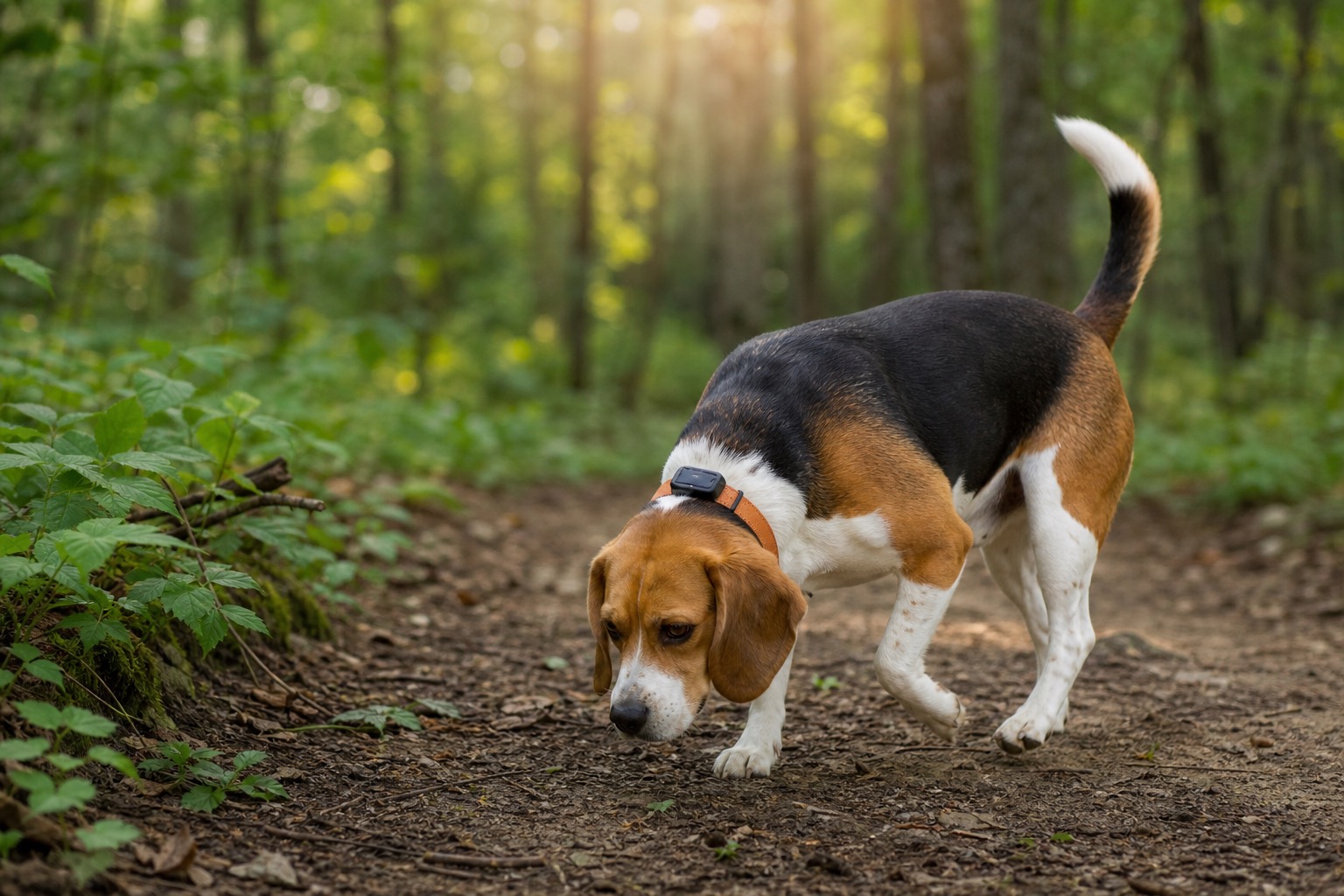
A tracker can help locate a lost Beagle; it cannot prevent an escape, guarantee signal, or replace a secure fence, recall training, current identification, and supervision. Treat it as one layer in a recovery plan. Before buying, identify where the dog actually walks: dense city blocks, suburban gardens, rural trails, and remote woodland have different network and line-of-sight constraints.
Compare the tracking system, not just the device
Most consumer options depend on a mobile network and typically require a subscription. Others use a receiver-based radio system, which can work differently in areas with limited cellular service but adds equipment and a learning curve. Bluetooth finding tools are useful only near compatible devices; they are not true long-range GPS recovery tools.
Ask four questions: What coverage is needed? How frequently does location update in normal and live modes? What does the subscription cost over a year? What happens when the device loses network or battery? A map screenshot in a product ad does not answer these questions.
| Situation | Capability to prioritize | Reality check |
|---|---|---|
| Suburban escape concern | Cellular coverage and geofence alerts | Test signal at home and on regular routes |
| Rural field walks | Appropriate radio/satellite-style system | Learn receiver use before an emergency |
| Dense neighbourhood | Frequent updates and audible finding tools | Buildings can affect position and signal |
| Everyday backup | Secure, light attachment | It stays on through normal shaking and rolling |
Fit the tracker without creating a new problem
The tracker must be firmly attached to a properly fitted collar or harness component that is appropriate for the dog. It should not swing into the chest, create a chewing target, or make the collar excessively heavy. Test the attachment indoors and during a calm walk. Keep a visible ID tag and ensure microchip details are current; electronics can fail, run out of power, or lose coverage.
Create a battery routine you will follow. Charge on a fixed day, confirm the app’s device status, and check that notifications still reach the intended phone. Test geofence alerts when the dog is safely with you, not during a first escape. Keep the account password, subscription date, and device serial information accessible to other household members.
Lost-dog plan
If the dog gets out, keep the tracker view open but do not assume the displayed point is live or exact. Bring a lead, high-value food, and a calm plan; chasing a scent-driven dog can push them farther away. Notify local animal services or neighbours when appropriate, and use current microchip/ID information as the backup path home.
Beagle tracker checklist
- Select cellular, receiver-based, or short-range technology for the places you actually use.
- Price the subscription, accessories, and replacement charging routine.
- Secure the attachment and test it on ordinary walks.
- Maintain ID tag, microchip information, and a reliable battery habit.
- Practise alerts and recovery steps before an emergency.
The best tracker is the one whose coverage, charging, attachment, and human response plan have all been tested before the Beagle needs it.
About the Reviewer
Our editorial team researches breed-related needs, compares product specifications, and updates guides as information changes. Product gear does not replace veterinary advice. Read our editorial process.