Dachshund Harnesses: Fit and Handling Guide (2026)
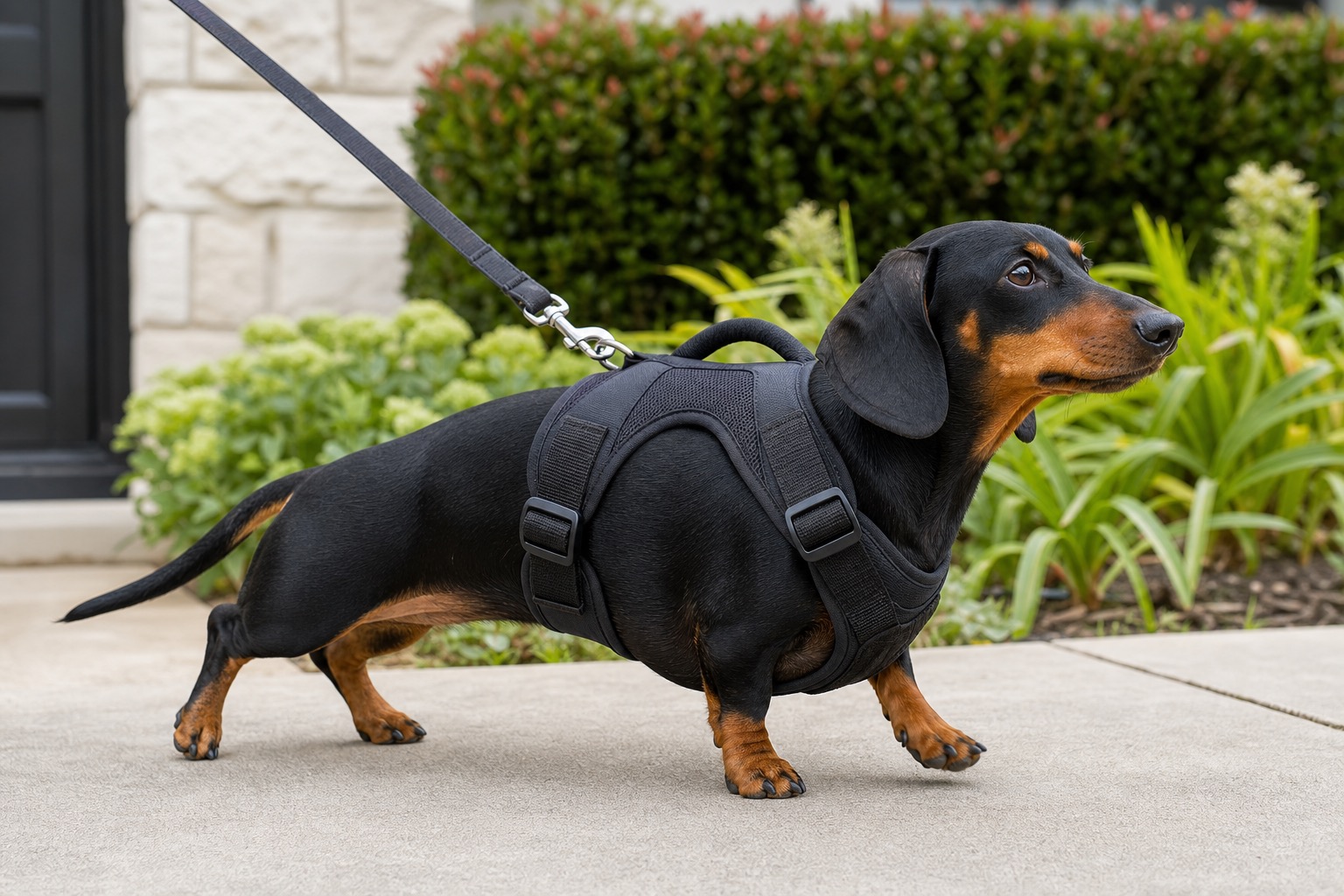
Dachshunds have a long, low body shape, but a harness cannot prevent intervertebral disc disease or make an injured dog safe to exercise. New pain, weakness, dragging limbs, loss of coordination, or changes in toileting are urgent veterinary concerns. For ordinary walking, choose a harness that fits the individual dog and supports calm, predictable handling.
See also: Harness fit by body type (long-back row).
Harness measurement checklist
- Chest girth: widest point of the ribcage, typically a hand’s width behind the front legs. Record the number the size chart asks for.
- Lower neck / throat: only if the chart requires it; keep the tape snug but not compressing the airway.
- Body length / panel proportion: withers to base of tail (or brand’s stated points) so the back panel can centre without sliding onto the neck or hips.
- Indoor fit test: walk, turn, sit, and sniff. Reject any harness that folds, rides up the throat, or lets the dog reverse out.
Long-backed dogs are sensitive to panel length. A ‘Dachshund’ label is not a substitute for girth numbers.
Measure the dog, then watch them move
Record the widest chest, the lower neck size requested by the brand, and the body length so you can compare panel proportions. A breed-specific label is only a starting point. Put the harness on indoors and centre the back section. The front component belongs on the chest, with the girth strap clear of the front legs. Test walking, turning, sitting, and sniffing; a harness that slides or folds during motion is not right.
| Use | Harness feature | Check |
|---|---|---|
| Everyday lead walk | Stable back clip and broad adjustment | It remains centred without rubbing |
| Escape concern | Secure body adjustment | It cannot be backed out of when properly fitted |
| Training plan | Rated front/back connection if needed | Trainer checks the configuration |
| Recovery support | Veterinarian-directed support product | Instructions and handling are specific to the dog |
Keep claims in proportion
Avoid products that claim to “protect the spine,” correct posture, or substitute for diagnosis. A walking harness is not a lifting device unless its maker expressly states that use and a veterinarian has advised it. Do not pick up a Dachshund by a walking harness or let a handle imply it is safe to lift. Use a calm, close-to-body handling method taught by a veterinary professional when lifting is necessary.
Build a repeatable routine
Use short early walks and inspect the coat and skin after removal. Replace cracked buckles, frayed webbing, or adjusters that slip. Keep the harness off indoors and do not leave it on in a crate. Pair the gear with sound household management: prevent unplanned chasing, keep routes non-slip, and ask your veterinarian about activity restrictions if the dog has a known condition.
Dachshund harness checklist
- Use chest and lower-neck measurements, plus body-panel proportion.
- Check clear front-leg movement and a centred leash connection.
- Never treat a walking harness as medical support or a lifting device by default.
- Remove after walks and inspect it for rubbing or damage.
- Contact a veterinarian promptly for neurologic or pain signs.
FAQ
Can a harness prevent IVDD? No. Fit for walking only; health decisions belong with a veterinarian.
What if my dog has a known back condition? Follow veterinary activity limits first, then choose gear that matches those limits—not marketing that promises protection.
The relevant question is not “Which harness prevents IVDD?” No harness can make that promise. It is “Which correctly fitted design helps this dog walk comfortably under appropriate supervision?”
About the Reviewer
Our editorial team researches breed-related needs, compares product specifications, and updates guides as information changes. Product gear does not replace veterinary advice. Read our editorial process.