Golden Retriever Grooming Tools: A Routine Guide (2026)
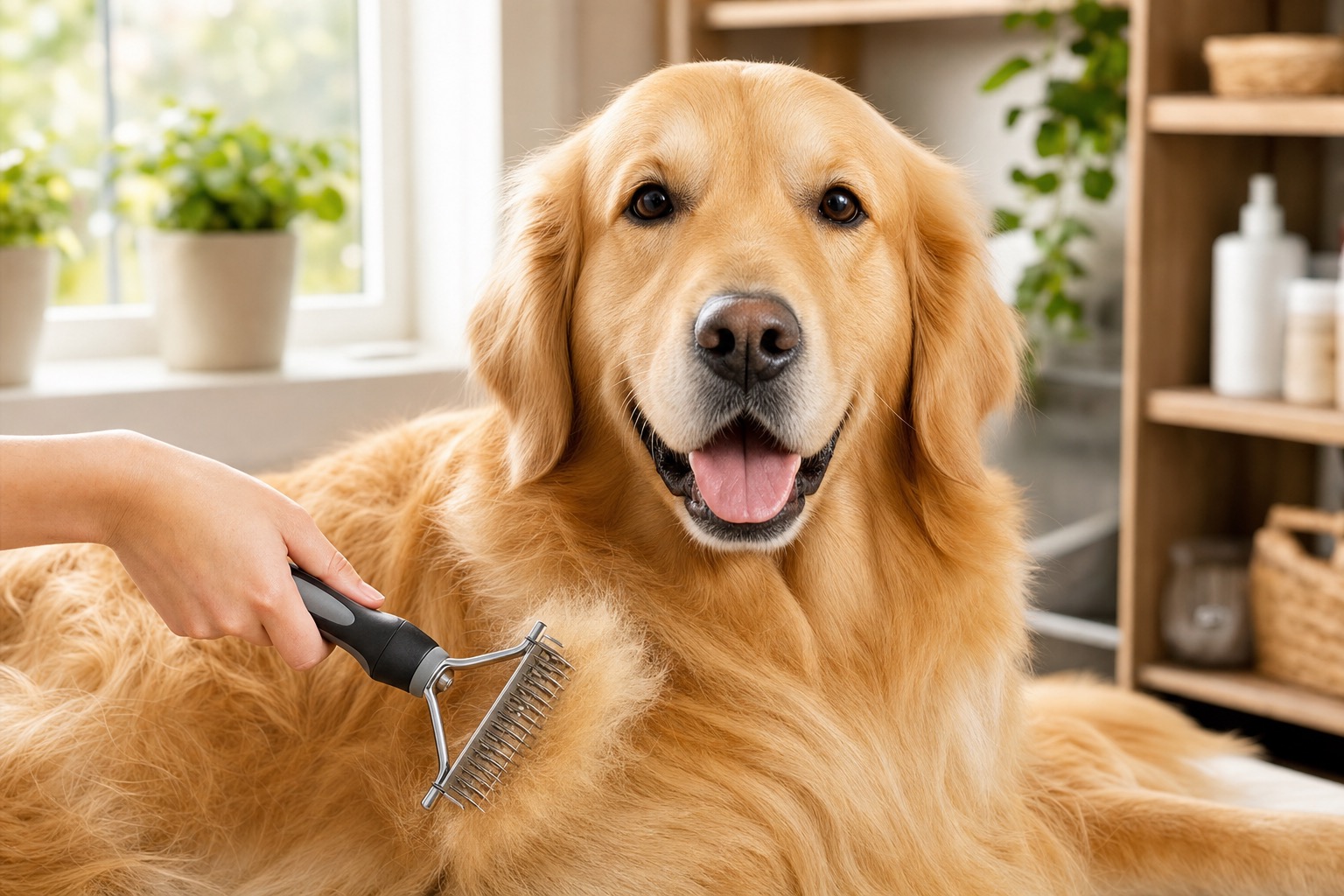
Golden Retrievers have a dense, water-resistant double coat that sheds year-round and heavily at seasonal changes. The aim of home grooming is to remove loose coat, find tangles early, and keep the dog comfortable—not to force every knot out or to replace professional or veterinary care. Painful skin, strong odour, wounds, parasites, or tight mats deserve professional advice.
Build a small, purposeful kit
Most homes need three things: a brush that reaches loose undercoat without scraping skin, a comb to check whether a section is actually clear, and a towel or washable surface for cleanup. Tool type should match the coat area. A pin brush or slicker can work through longer feathering; a wide-tooth comb is useful for checking behind ears, under the collar, leg feathering, and tail; an undercoat rake should be used gently and only when it moves loose hair without pulling.
| Coat task | Tool to compare | Test |
|---|---|---|
| General loose hair | Pin or slicker brush | Pins do not scratch or snag |
| Dense seasonal coat | Gentle undercoat tool | Short passes release hair without resistance |
| Tangle check | Metal comb | Comb reaches the skin without pulling |
| Bath cleanup | Rubber brush or wash mitt | It is easy to clean and comfortable when wet |
Technique is more important than speed
Work in small sections and brush away from the skin, beginning at the outer coat before moving closer. Hold the hair above a small tangle to reduce pulling, then use fingers or a comb to tease it apart. Stop if the dog flinches or the tool catches repeatedly. Never cut close to skin or use force on a tight mat; seek a groomer instead.
Regular short sessions are easier than an exhausting monthly “blowout.” Use a calm location, reward breaks, and clean hair out of the brush as you go. After a muddy walk, let the coat dry enough to brush without grinding grit through it.
Protect the coat’s condition
Avoid shaving a healthy double coat as a casual shedding solution. It changes coat regrowth and does not remove the need for heat management, shade, water, and suitable activity timing. Use shampoo and skin products only as directed; over-bathing can complicate skin care. Clean and dry tools after use, especially metal pins and combs.
Golden grooming checklist
- Work in short, regular sessions with a brush and a checking comb.
- Inspect behind ears, under harness contact points, leg feathering, and tail.
- Stop before grooming becomes painful or the dog becomes distressed.
- Clean tools, use gentle technique, and avoid shaving as a shedding shortcut.
- Seek professional or veterinary help for mats, skin changes, or persistent discomfort.
Reliable grooming gear is gear you can use gently and consistently. A single “miracle” deshedding tool is rarely the answer.
About the Reviewer
Our editorial team researches breed-related needs, compares product specifications, and updates guides as information changes. Product gear does not replace veterinary advice. Read our editorial process.