Great Dane Feeding Gear: Practical Setup Guide (2026)
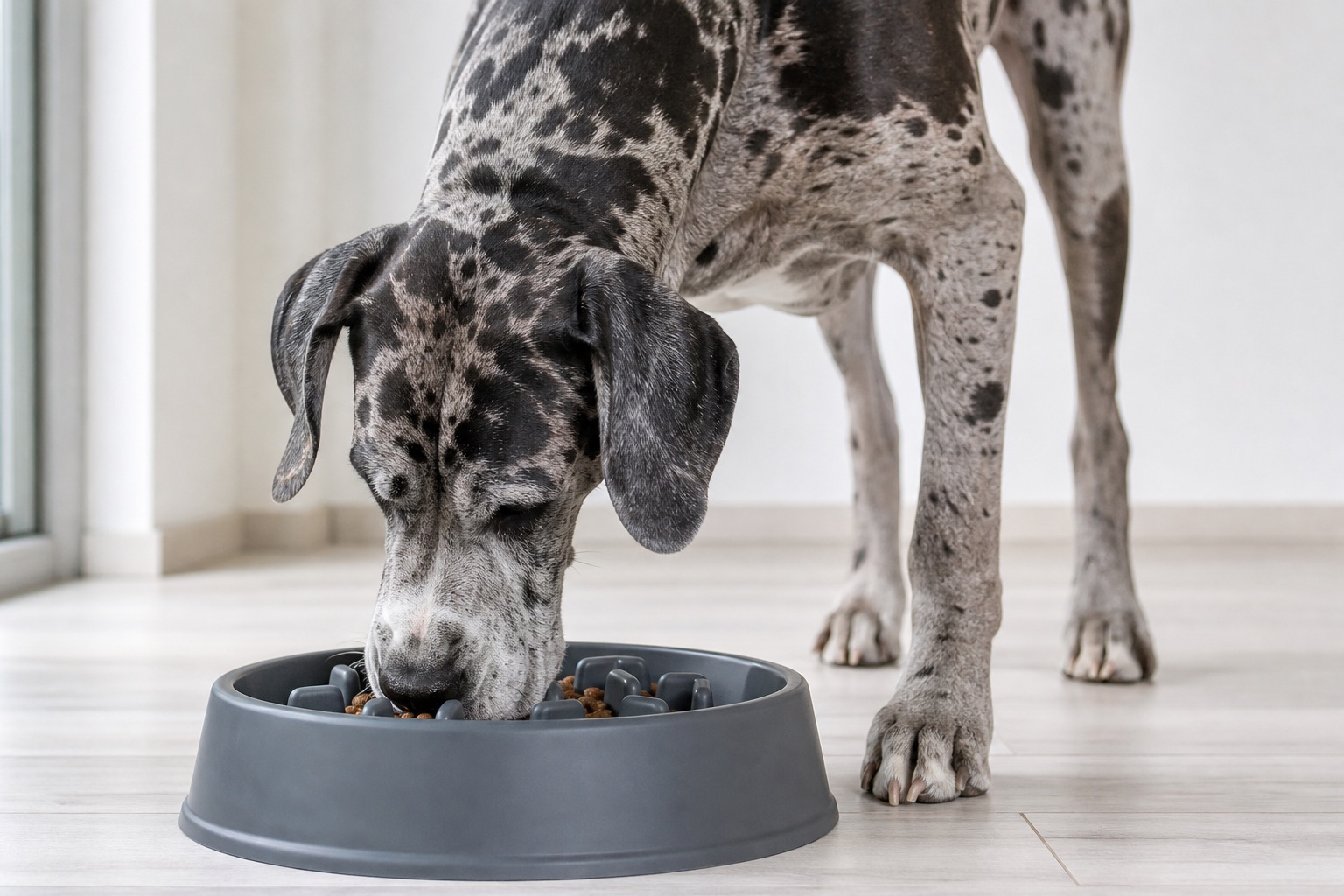
Feeding equipment can make a Great Dane’s routine cleaner and slower, but it cannot prevent gastric dilatation-volvulus (GDV), replace nutrition advice, or make a dog with emergency signs safe to watch at home. Distended abdomen, unproductive retching, collapse, or marked distress demand emergency veterinary care. Discuss individual meal size, activity, bowl height, and preventive options with the dog’s veterinarian.
Start with the daily routine
Choose equipment after deciding where, when, and how the dog eats. A stable floor-level bowl is often the simplest baseline; raised feeders are not universally appropriate, so do not treat bowl height as a health intervention without veterinary input. The bowl should hold a measured portion without a precarious brim, stay in place, and be simple to wash.
Slow-feeder patterns can make some dogs work through dry food more gradually. They are not suitable if the dog becomes frustrated, tries to chew the bowl, or cannot safely reach the food. Test one meal under supervision and remove any damaged plastic or loose parts.
| Need | Equipment to compare | What to check |
|---|---|---|
| Ordinary meals | Wide, stable bowl | It does not tip or slide |
| Faster eater | Appropriate slow-feeder insert | Food is accessible and the dog stays calm |
| Mess control | Washable mat or basin | It does not create a trip hazard |
| Travel | Lidded, measured container | Portions stay dry and clearly labelled |
Make cleaning unglamorous and easy
Food residue and water bowls need routine washing. Pick non-porous, food-safe materials that can be cleaned according to the maker’s directions. Check feet, rims, and slow-feeder grooves for cracked or worn surfaces. A large mat can contain spills, but it should lie flat and be cleaned often enough that it does not become a slippery, dirty zone.
Measure meals with the plan provided by your veterinarian or veterinary nutrition professional rather than filling a bowl by appearance. Keep food storage sealed and dry. Changes in appetite, drinking, stool, or weight are information worth bringing to a professional, not signals to buy a more elaborate feeder.
Great Dane feeding checklist
- Use a stable bowl and set up a calm, supervised eating location.
- Discuss bowl height and meal structure with the veterinarian; do not assume elevated is safer.
- Try slow-feeding equipment only if it is safe and accepted by the individual dog.
- Wash bowls and mats routinely; replace damaged items.
- Know GDV emergency signs and seek urgent care rather than relying on feeding gear.
The useful feeding station is simple, measurable, and clean. Its job is to support a sound routine, not to promise disease prevention.
About the Reviewer
Our editorial team researches breed-related needs, compares product specifications, and updates guides as information changes. Product gear does not replace veterinary advice. Read our editorial process.