German Shepherd Home-Support Gear Guide (2026)
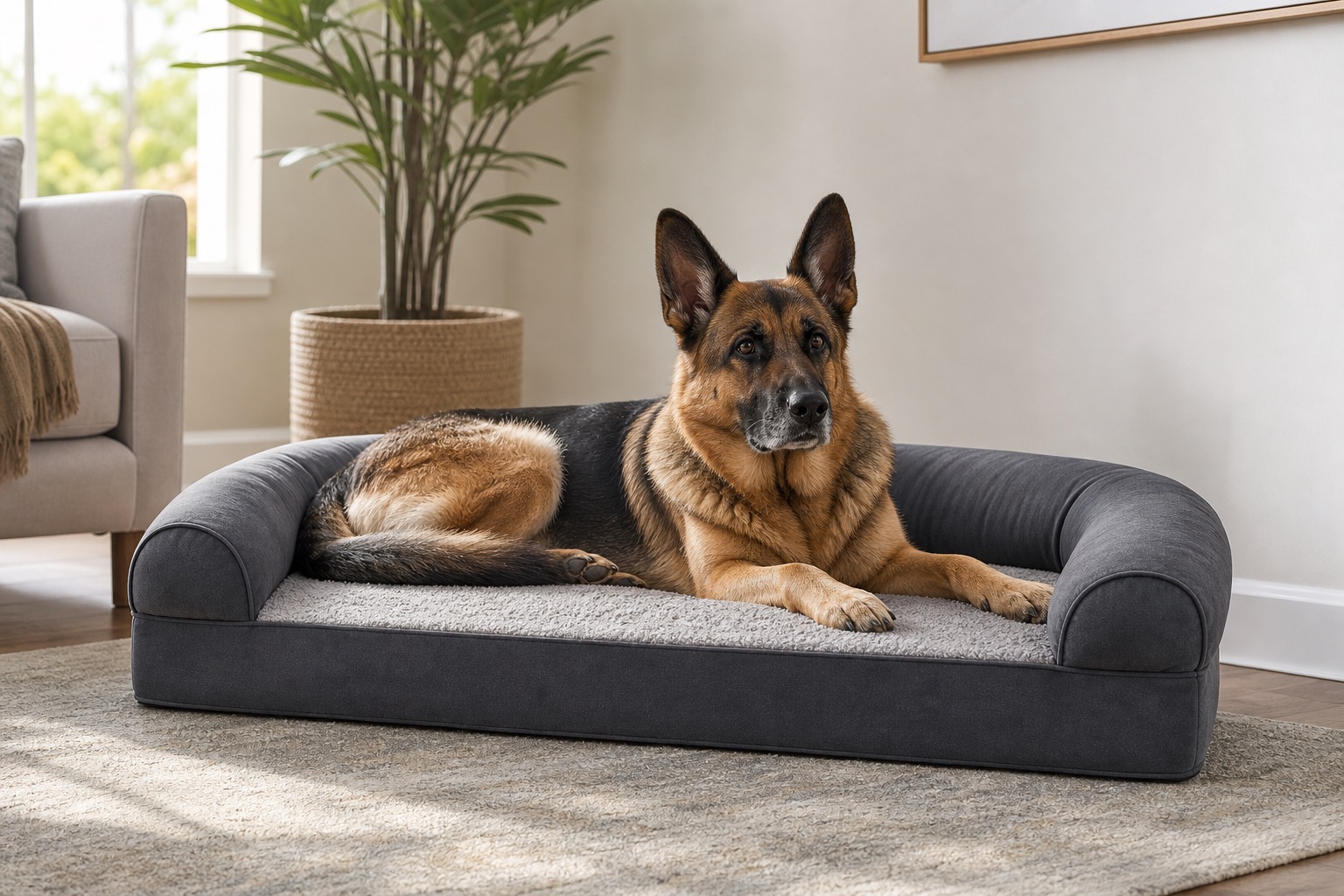
Bed measurement checklist
- Sleep stretch: measure nose-to-rump in the dog’s longest relaxed stretch on the floor; add margin at both ends.
- Interior surface: use the flat sleeping area, not the outer box size. Bolsters can remove a large share of usable space.
- Entry height: choose a low, stable approach the dog will use without jumping or twisting awkwardly.
- Placement test: level floor, non-slip base, quiet route—watch voluntary use for several days before adding accessories.
Interior sleep surface and entry height beat thickness marketing.
Related: Senior dog beds · Senior bed entry height.
Home-support gear can make daily routines easier for a German Shepherd, but it does not diagnose or treat hip, spinal, or neurologic disease. New pain, weakness, collapse, dragging feet, or a sharp change in mobility should be assessed by a veterinarian. Start with an individual plan, then use equipment to make that plan easier to follow.
Reduce avoidable friction at home
Look first at the routes the dog already uses: bed to door, food area, car, and favourite resting spot. A stable bed with enough sleeping surface, a non-slip runner on a slick floor, or a suitably sized ramp can be more useful than a complicated brace. Each item should be stable, easy to clean, and introduced gradually while the dog is supervised.
| Home task | Gear to compare | Safety check |
|---|---|---|
| Resting | Large flat bed or low bolster | Interior size and stable entry |
| Smooth floor route | Non-slip runner or mat | It does not curl or slide |
| Vehicle access | Rated ramp | Secure footing, gradual incline, supervised use |
| Brief assistance | Vet-recommended support sling | Correct placement and handling instruction |
Fit and practice matter
A ramp that is too steep or slippery will not become safe because it has a high weight rating. Test it at a low height, add appropriate traction if the maker permits it, and never force a hesitant dog to climb. A sling should be used exactly as instructed; a walking harness is not automatically a lifting sling. Ask a veterinary professional to show you safe support if the dog needs help rising or using stairs.
For beds, measure the dog’s stretched sleep position and check interior dimensions. For runners, ensure door swings and furniture do not create a narrow trap. Clean surfaces routinely and replace anything with exposed foam, split rubber, unstable fasteners, or worn traction.
German Shepherd support checklist
- Let veterinary advice define the health plan and activity limits.
- Make the highest-use routes stable before adding specialised equipment.
- Check every ramp, sling, mat, and bed under supervised real use.
- Avoid medical claims, unapproved lifting, and “one-size” brace promises.
- Reassess after mobility changes, not just when gear wears out.
The most effective home setup is often a few reliable changes that reduce slips and awkward transitions, used alongside—not instead of—professional care.
About the Reviewer
Our editorial team researches breed-related needs, compares product specifications, and updates guides as information changes. Product gear does not replace veterinary advice. Read our editorial process.