Pomeranian Harnesses: Secure Small-Dog Fit Guide (2026)
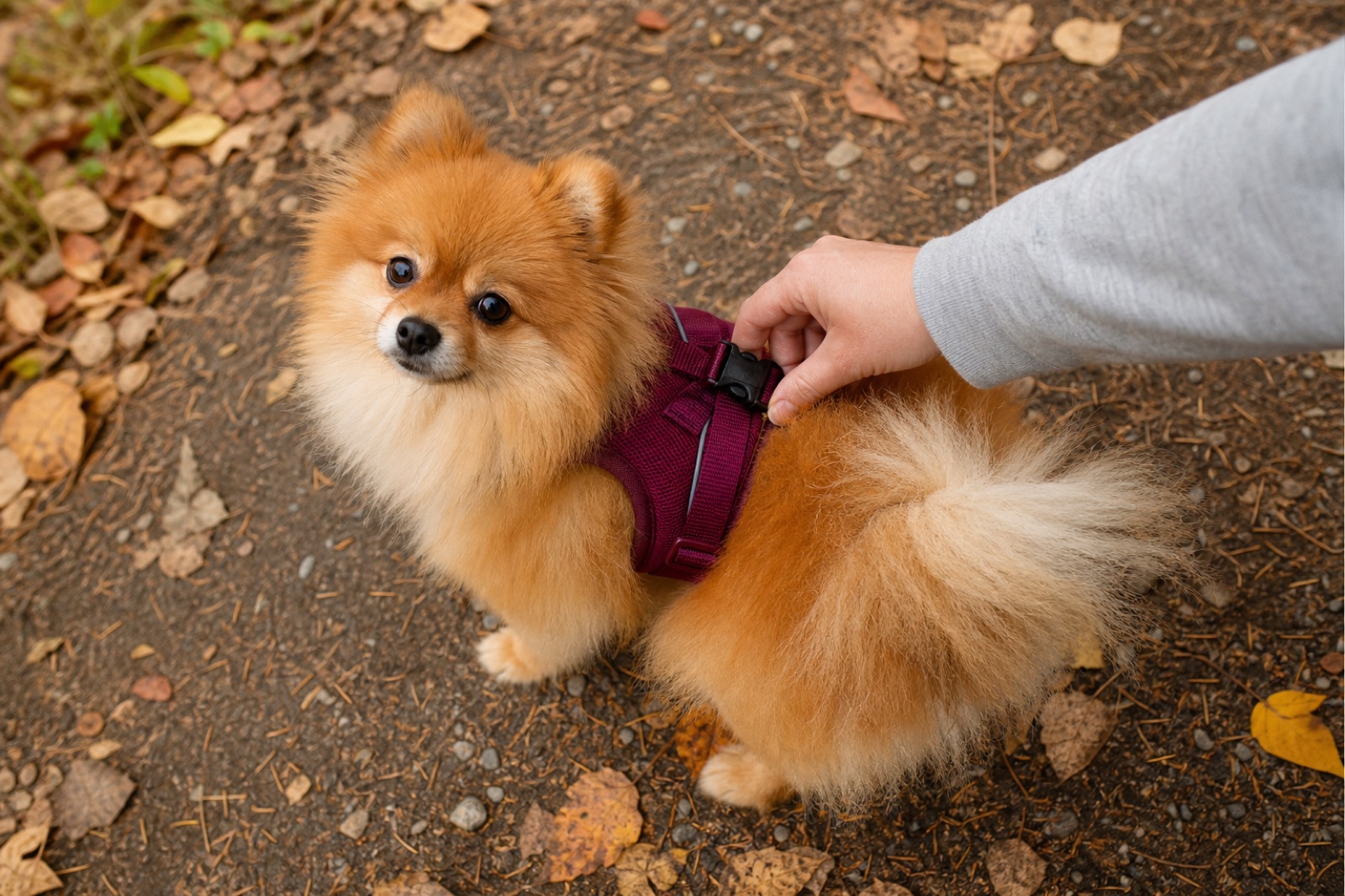
Harness measurement checklist
- Chest girth: widest point of the ribcage, typically a hand’s width behind the front legs. Record the number the size chart asks for.
- Lower neck / throat: only if the chart requires it; keep the tape snug but not compressing the airway.
- Body length / panel proportion: withers to base of tail (or brand’s stated points) so the back panel can centre without sliding onto the neck or hips.
- Indoor fit test: walk, turn, sit, and sniff. Reject any harness that folds, rides up the throat, or lets the dog reverse out.
Use the brand chart that matches this product family; recheck after body-condition changes.
Related: How to measure a dog for a harness · Harness fit by body type.
A small harness should not be chosen by cuteness or by a promise that one style works for every tiny dog. A Pomeranian needs a light, secure fit that stays in position as the dog walks and turns. The best way to avoid a poor purchase is to measure, test indoors, and take the first few walks slowly enough to see what shifts. A harness is walking equipment, not medical treatment.
Measure the body the harness will hold
Measure the widest chest behind the front legs, then any lower-neck position named in the size chart. Use the product’s range rather than a generic “toy” designation. Hair can make a loose harness look snug, so part the coat lightly and measure close to the body without tightening the tape. A fit at the minimum or maximum end of a range leaves little room for seasonal coat changes or adjustment.
The harness should sit centred down the back, with its front section on the chest and no strap pressing into the neck. Test the gap behind the front legs through a few steps, a turn, a sit, and a head-down sniff. You want secure contact without rubbing, hard folds, or a harness that drifts to one side. Do not rely on a single “two finger” rule when the dog is very small; movement tells you more.
| Need | Harness characteristics | Check on the dog |
|---|---|---|
| Daily pavement walk | Light adjustable back-clip design | It remains centred on a loose leash |
| Flight-risk dog | Multiple secure adjustments | It cannot be backed out of without over-tightening |
| Training plan | Rated front/back attachments when needed | Trainer-approved fit and use |
| Nighttime route | Simple visible detail | Nothing dangles into the dog’s path |
Favour stable, low-bulk parts
Heavy padding is not automatically kind to a small dog. Smooth edges, a narrow enough chest panel, sound stitching, and buckles that lock reliably are the features that matter. Wide fabric can conceal a shifted fit and retain moisture. Choose a design that lets you see where the body straps lie.
Clip the leash only to a manufacturer-designated attachment. Decorative rings and carry handles may not be built for leash tension. If you use a front attachment as part of training, follow a trainer’s guidance and keep the arrangement simple. Never use the harness to lift the dog unless the product explicitly permits it and you have been shown the correct method.
Monitor the first week
Start with a quiet, short route. Pause after a few minutes to recheck the chest, girth strap, and alignment. After removal, look for hair caught in seams, rub points, or a strong desire to scratch. If the dog freezes during fitting or repeatedly tries to escape, do not force continued wear: reassess the design and fit.
Clean fasteners of hair and grit, follow care instructions, and dry the harness fully. Inspect webbing at the buckle and leash ring. Replace it when hardware cracks, webbing frays, or adjusters creep loose. Take the harness off indoors and whenever the dog is unattended.
Pomeranian harness checklist
- Measure close to the body and use the exact manufacturer range.
- Validate centring, front-leg clearance, and full movement indoors.
- Prefer light, visibly adjustable construction over bulk.
- Use only rated leash connections; never guess at load-bearing parts.
- Recheck after early walks and remove from use when damaged.
For a Pomeranian, secure and unobtrusive beats elaborate: the right harness is stable enough to handle the walk and quiet enough that the dog can forget it is there.
Use a calm handoff routine
If several people walk the dog, a harness can gradually be adjusted differently by each handler. Keep a quick photo of the correct placement and agree that nobody adds an accessory ring or second strap without retesting movement. Check buckle clicks aloud before leaving and make sure identification is attached to the collar or rated loop rather than the leash ring. This small routine is especially useful for compact gear, where a twisted strap can be difficult to spot under a fluffy coat.
For a new dog sitter, demonstrate the fitting sequence in person. A written size label does not show where each strap should settle on an individual dog.
Store the measured chest range with the harness so replacing it is straightforward. That record is far more useful than trying to remember whether the old piece was labelled extra-small or small.
When travelling, bring the same proven harness rather than switching to an untested backup. New surroundings already add variables; poorly fitted replacement gear should not be another one.
About the Reviewer
Our editorial team researches breed-related needs, compares product specifications, and updates guides as information changes. Product gear does not replace veterinary advice. Read our editorial process.