Yorkshire Terrier Harnesses: Fit and Everyday Use (2026)
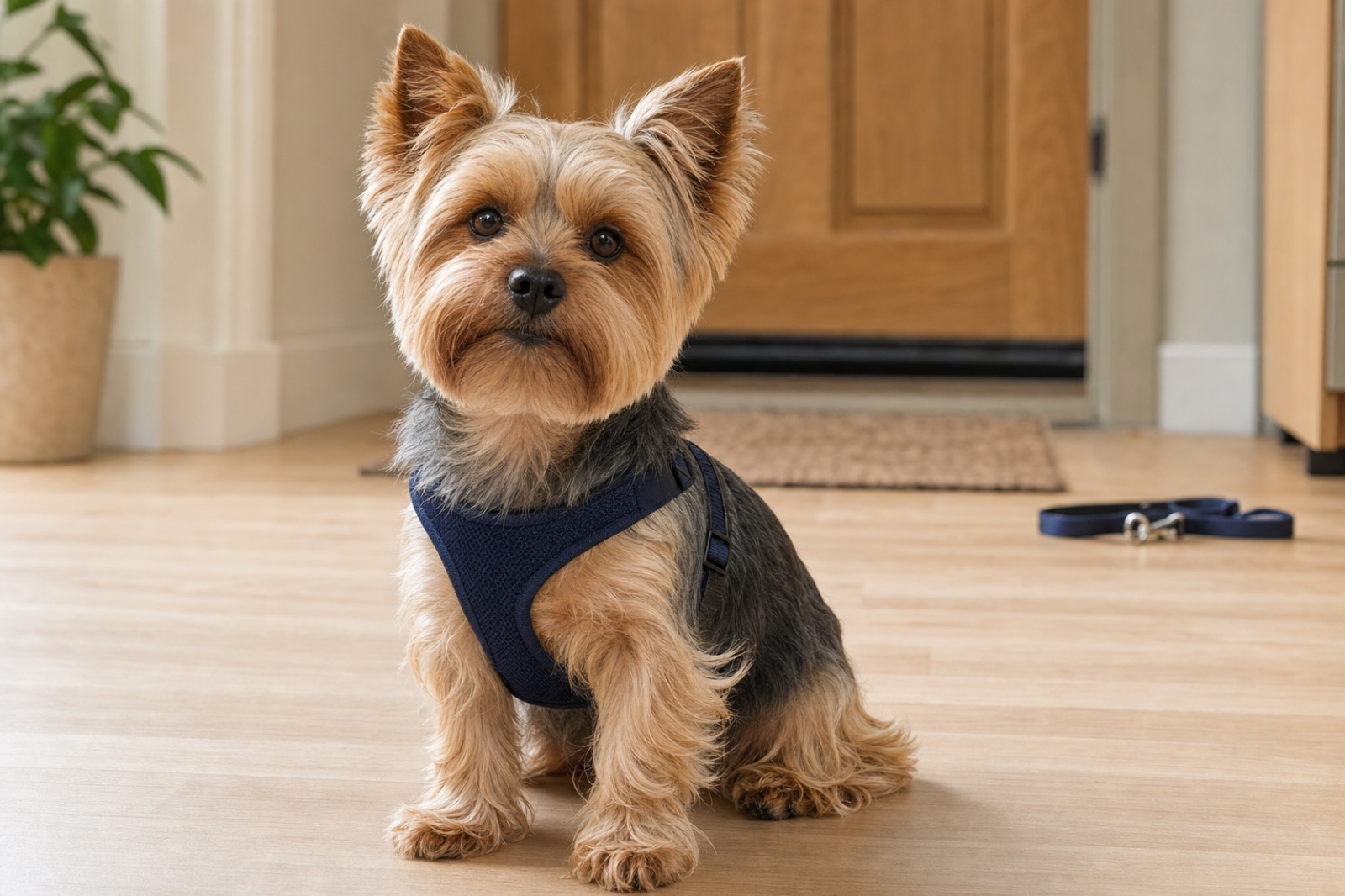
Harness measurement checklist
- Chest girth: widest point of the ribcage, typically a hand’s width behind the front legs. Record the number the size chart asks for.
- Lower neck / throat: only if the chart requires it; keep the tape snug but not compressing the airway.
- Body length / panel proportion: withers to base of tail (or brand’s stated points) so the back panel can centre without sliding onto the neck or hips.
- Indoor fit test: walk, turn, sit, and sniff. Reject any harness that folds, rides up the throat, or lets the dog reverse out.
Use the brand chart that matches this product family; recheck after body-condition changes.
Related: How to measure a dog for a harness · Harness fit by body type.
A Yorkshire Terrier harness needs precision more than padding. Small changes in strap position are proportionally large on a very small body, and long hair can obscure whether a buckle or seam is sitting correctly. Choose the harness for a specific walking routine, fit it indoors, and inspect it after use. It is not a medical device, and symptoms such as coughing, pain, or reluctance to move should be handled with a veterinarian rather than a different piece of gear.
Use a tape measure, not a size label
Measure the chest at its widest point behind the front legs and the lower neck position stated in the brand’s instructions. Measure close to the body, moving hair aside gently if necessary. Compare the numbers with the maker’s own table. A “small” range can span several pounds and be far too broad to be meaningful.
When fitting, keep the back panel aligned with the spine. The chest component should lie flat on the breastbone area, not ride up at the throat. Check the clearance behind each front leg while the dog walks, turns, sits, and lowers their nose. Watch from both sides. A neatly adjusted still photo cannot reveal a strap that moves into the leg area with each step.
| Walk type | Harness choice to compare | Practical criterion |
|---|---|---|
| Short daily walk | Low-bulk adjustable back clip | It stays centred under light leash pressure |
| New-skill training | Approved front/back connection if needed | A qualified trainer has checked the setup |
| Busy street | Secure buckles and clear identification attachment | No dangling tag or lead interferes with stride |
| Longer outing | Comfortable edges and reliable adjusters | Hardware remains aligned after movement |
Keep hair and hardware in mind
A protected zipper or smooth buckle zone can reduce hair catching, but it still needs inspection. Check hook-and-loop tabs for hair and dirt after each walk. Avoid harnesses with loose tassels, decorative metal, or an excess of fabric around the front legs. The simplest pattern that fits well is often easiest to monitor.
Use the leash ring the maker identifies as load-bearing. Do not attach a lead to a decorative D-ring, an ID-tag loop, or a handle unless it is specifically rated. A front connection can be appropriate in a structured training plan; it is not a standalone solution for pulling. Never lift the dog by the harness unless the instructions expressly permit it.
Recheck every early outing
Use short familiar routes for the first several walks. Stop after a few minutes and confirm that the back panel is centred, the straps have not folded, and the dog has a normal stride. After removing it, look at the contact points and brush hair clear of seams. Persistent scratching, a changed gait, or a dog that avoids the harness calls for an immediate pause and reassessment.
Wash following the label, close fasteners before laundering, and dry fully. Replace hardware that cracks, webbing that frays, or adjusters that slip. Take the harness off at home and never leave it on an unattended dog where it could snag.
Yorkie harness checklist
- Take chest and lower-neck measurements from the body, not over hair.
- Confirm centred placement and open movement before the first walk.
- Choose smooth, low-bulk closures and keep them free of hair.
- Clip only to the rated leash point.
- Inspect contact areas, stitching, and hardware routinely.
The right Yorkie harness makes the walk easier to manage without becoming the most noticeable thing the dog is wearing.
Keep a consistent fitting order
Place the harness in the same order each time: centre the back panel, settle the chest section, fasten the body strap, then check the leg clearance before clipping the lead. A predictable sequence prevents hair from being caught in a buckle and helps a small dog learn what to expect. Take a top-down reference photo once the fit is proven. After grooming or laundering, compare the adjustment with that photo instead of guessing. If the harness no longer reaches the same stable position, do not force it; reassess the size or pattern.
Keep the harness dry between walks and do not store it under a pile of wet leads. Clean, untwisted webbing makes the next fitting inspection quicker and more reliable.
For a replacement, remeasure rather than ordering the old labelled size. Different manufacturers distribute their adjustment range and body-panel length very differently, even when their size names match.
About the Reviewer
Our editorial team researches breed-related needs, compares product specifications, and updates guides as information changes. Product gear does not replace veterinary advice. Read our editorial process.