Senior Labrador Beds: Fit, Entry, and Care Guide (2026)
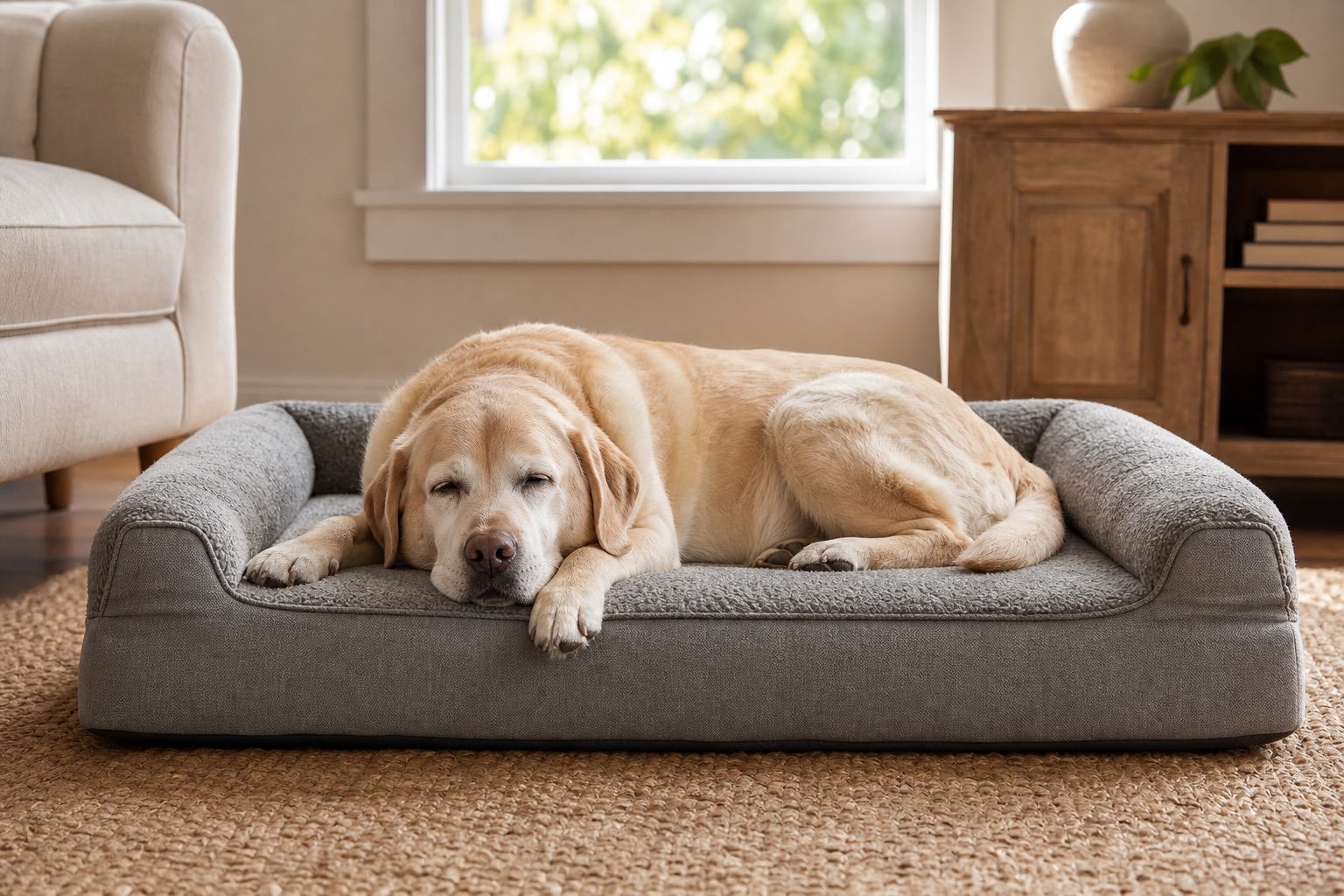
A senior Labrador bed should make resting routine and predictable, not promise to fix a mobility problem. Dogs that show pain, sudden stiffness, difficulty standing, or a major change in sleep behaviour need veterinary advice. The bed’s job is more modest: provide a level place to settle, an easy route in and out, and a cover that the household can keep clean.
See also: Senior dog beds hub · German Shepherd mobility gear.
Bed measurement checklist
- Sleep stretch: measure nose-to-rump in the dog’s longest relaxed stretch on the floor; add margin at both ends.
- Interior surface: use the flat sleeping area, not the outer box size. Bolsters can remove a large share of usable space.
- Entry height: choose a low, stable approach the dog will use without jumping or twisting awkwardly.
- Placement test: level floor, non-slip base, quiet route—watch voluntary use for several days before adding accessories.
Labs often sprawl. When in doubt, prioritise interior length over tall bolsters.
Measure the sleeping surface, not the dog’s weight
Watch how your Labrador sleeps on the floor. Measure from nose to rump in the longest relaxed stretch and add room at both ends. Then compare that with the interior sleeping dimensions. A bed may be listed as “large” while thick bolsters remove much of the flat surface. A rectangular mattress is usually the clearest option for a dog that sprawls; a low three-sided bolster can suit a dog that rests their head against an edge.
The entrance matters as much as the cushion. A high front wall, a bed that slides on wood flooring, or an uneven centre can discourage a dog from using it. Place a bed on a level route away from doors and heater vents. If the base moves when the dog turns, use a non-slip pad underneath.
| Sleeping habit | Bed format to compare | Check first |
|---|---|---|
| Full stretch | Broad rectangular mattress | Inside length and a level centre panel |
| Head resting on an edge | Low open-front bolster | Wide, low entrance and usable interior size |
| Crate or travel | Flat washable pad | Exact floor dimensions and no folded edges |
| Warm room | Breathable cover or alternate mat | A choice of cooler and warmer rest areas |
Evaluate the parts you will maintain
Ignore vague “therapeutic” wording until you know the cover material, fill construction, zipper protection, and wash instructions. A removable, machine-washable cover with a protected zipper is often more valuable than a decorative finish. Press the centre and corners: the surface should be even, without an obvious hard spot or loose bunching. An inner liner can simplify cleanup, but the top surface should still be comfortable and non-slip.
Keep a spare cover if wet paws, drool, or muddy seasons make regular laundry likely. Check the bed after washing for shifted fill, exposed foam, and damaged fasteners. A bed is not a chew item; remove it if the dog gets access to filling or hardware.
Let the first week decide
Leave the new bed in a familiar quiet spot and let the dog approach it without repeated prompting. The fit has passed when the Labrador can enter, turn, lie fully on the surface, and choose it voluntarily. If the dog continually rests half on the floor, avoids a high edge, or moves it from its location, change the size, shape, or placement before buying accessories.
Senior Labrador bed checklist
- Measure a real stretched sleeping position and use interior dimensions.
- Select a stable, floor-level entry and test the base on the intended flooring.
- Prioritize a removable cover, contained fill, and protected hardware.
- Give the dog a temperature choice rather than relying on one heavily insulated bed.
- Seek veterinary guidance for pain or new mobility changes rather than treating the bed as therapy.
FAQ
Is thicker foam always better? Not if the dog cannot enter easily or the surface hammocks in the centre. Even support and usable size beat a thickness claim.
Should the bed go next to a heater? Prefer a stable, draft-aware location the dog already likes. Overheating seniors may abandon a thick bed for cool floors—offer a second cooler option.
A trustworthy senior-dog bed guide should make these decisions clearer. It should not claim that a thickness, foam label, or affiliate product can extend a dog’s active years.
About the Reviewer
Our editorial team researches breed-related needs, compares product specifications, and updates guides as information changes. Product gear does not replace veterinary advice. Read our editorial process.